Driving the Wild Atlantic Way: 2,500 Kilometres of Ireland at Its Most Dramatic
The world's longest defined coastal route runs the entire western seaboard. Here's how to do the greatest road trip in Ireland without trying to do all of it.
Somewhere between Donegal and Cork, the Wild Atlantic Way will do the thing it does to everyone: a corner opens, the ocean drops away beneath you, and you pull in — not because there's a viewpoint sign, but because your body refuses to keep driving past it. This is 2,500 kilometres of road hugging Ireland's entire western coast, and the single most important thing to know about it is that you should not attempt the whole thing in one trip.
What follows is a guide to doing it properly: which stretch to choose, what to see and what to skip, where to sleep, what it costs in 2026, and how to drive roads that were laid down for carts and have never entirely forgiven the car.
First, a correction about where it starts
Almost everyone will tell you the route runs from Malin Head to Kinsale. Almost everyone is wrong. Fáilte Ireland's route officially begins at Muff, County Donegal, just over the border from Derry, and finishes at Kinsale, County Cork. Malin Head is a Signature Discovery Point — the most northerly one, and the most photographed — but it isn't the finish line. This matters only if you're the sort of person who likes to touch both ends, in which case: add the Inishowen Peninsula and don't say we didn't tell you.
The route is formally divided into six stretches, running north to south, and knowing their names is the fastest way to make sense of a coastline this long.
Pick a stretch, not the lot
Trying to drive all 2,500 kilometres in a week is how you turn the most beautiful coast in Europe into a blur of petrol stations and disappointed silences. Ten to twelve days will do the full route at a pace that still allows lunch; seven days will comfortably do Kerry and Clare together, or Mayo and Connemara, or Donegal on its own. Five unhurried days in one region beats a fortnight rushing three.
Here is the honest character sketch. The north — Donegal — is rugged, empty and almost defiantly uncommercial; it has never once tried to charm you, which is precisely why it does. The middle — Mayo, Connemara, Galway — is the postcard, all bog and mountain and impossible light. The south-west — Clare, Kerry, Cork — has the headline acts, the best food and, in high summer, the traffic to match.
The north: Donegal and the Surf Coast
Start at Malin Head if you're going to be sentimental about it. There's a free car park that fills by mid-morning in summer, a signal tower, paved paths that get you most of the way to the view without ruining your shoes, and Caffé Banba's coffee van from Easter to September. Then turn south-west and give yourself three days to get to Sligo.
The unmissable stop is Sliabh Liag — sea cliffs rising 601 metres, nearly three times the height of the Cliffs of Moher and with a fraction of the crowd. Park free at the visitor centre and take the shuttle bus, which runs July through September; outside those months you can buy a ticket at the Ranger Station car park (€5 for two hours, €15 for the day) and drive up yourself. In peak season, vehicle access to the upper car park is restricted, so the shuttle is not a compromise — it's the plan.
Between the two, Donegal does the thing it is best at: nothing, magnificently. Glenveagh's lakes, the Slieve Tooey coast road, Fanad and Horn Head, gold beaches you will have to yourself in June. Then the Surf Coast opens up around Bundoran and Strandhill, Sligo gave us Yeats and the brooding flat-topped Benbulben, and Mullaghmore's big-wave reef breaks in a winter swell are worth a stop even if you never intend to get wet. If you only have a week, our full Donegal guide makes the case for spending all of it here.
The middle: Mayo, Connemara and Galway
Mayo is the most underrated county on the route. Achill Island is reached by bridge, so there's no ferry timetable to organise, and the Atlantic Drive around its southern edge is the best forty minutes of driving in Ireland. Keem Bay, at the end of the R319, is the beach every photograph has promised you: a horseshoe of white sand under a green amphitheatre. Parking is free, first-come, and gone by eleven in August. Note that essential roadworks closed the Keem access road to non-local traffic during the day in July — check Mayo County Council before you build a morning around it.
Downpatrick Head, further north, is where the sea stack Dún Briste stands severed from the mainland, and the blowhole beside it breathes. It takes twenty minutes and stays with you for years. South of Westport, the Great Western Greenway now runs 49 kilometres to Achill on an old railway line — the single best way to get out of the car for half a day.
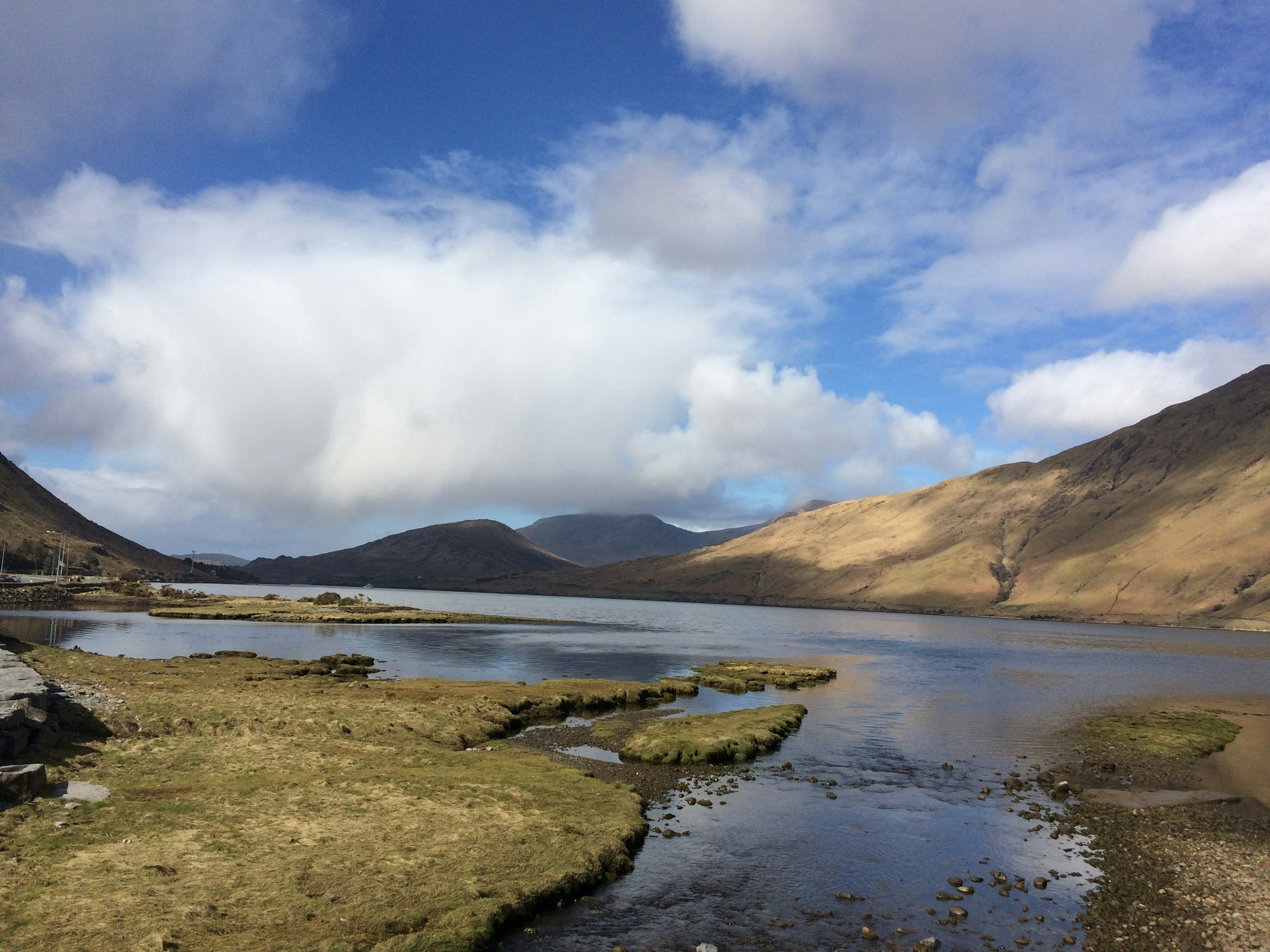
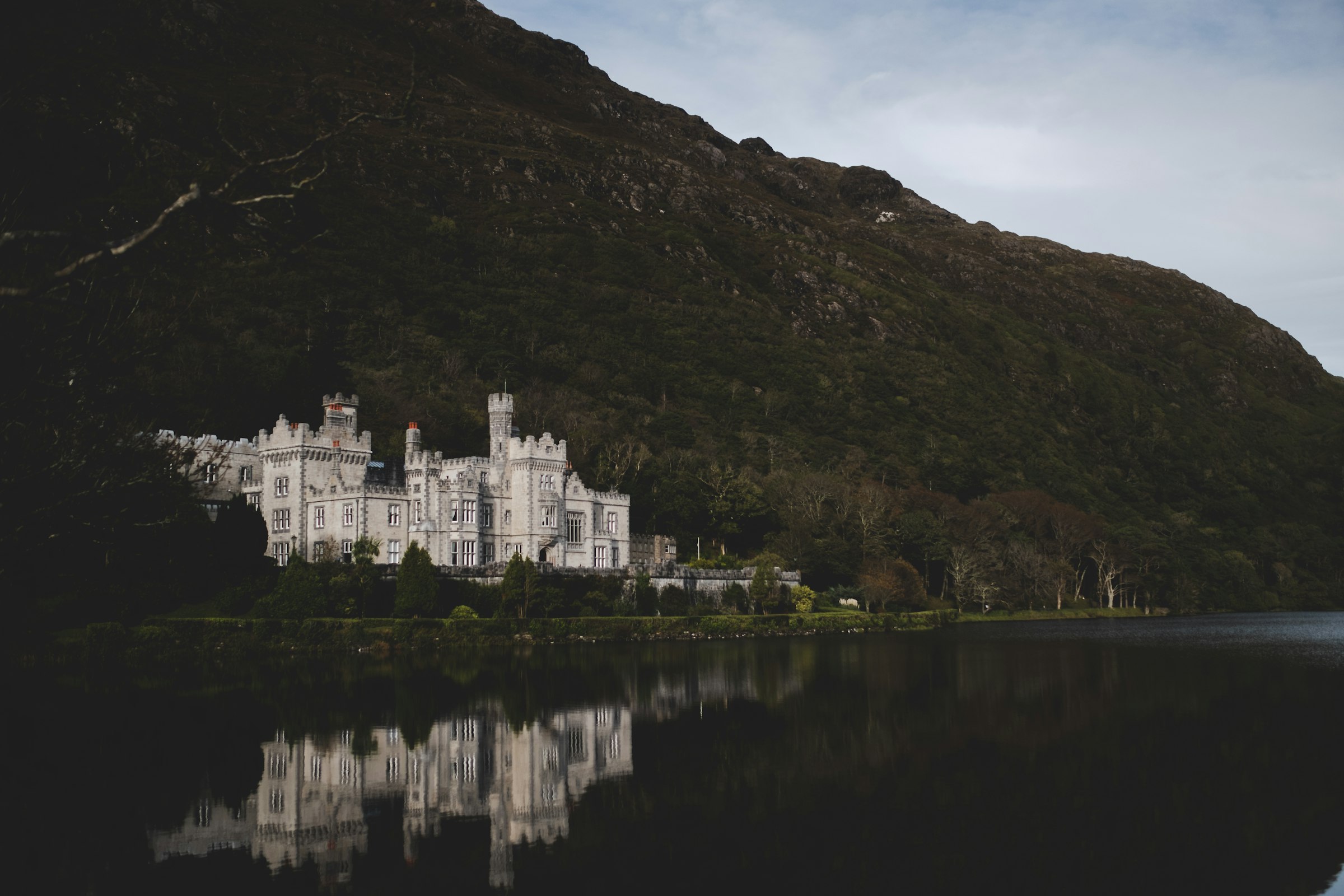
Then Connemara, which undoes better writers than me. Point the car at the Sky Road out of Clifden, drive Killary Harbour with the mountains falling into the water on both sides, and take the fjord cruise from Nancy's Point near Leenane if the weather is behaving — ninety minutes, about €26, April to October. Kylemore Abbey is the one busy thing in Connemara that earns its coach park.
The south-west: Clare, Kerry and Cork
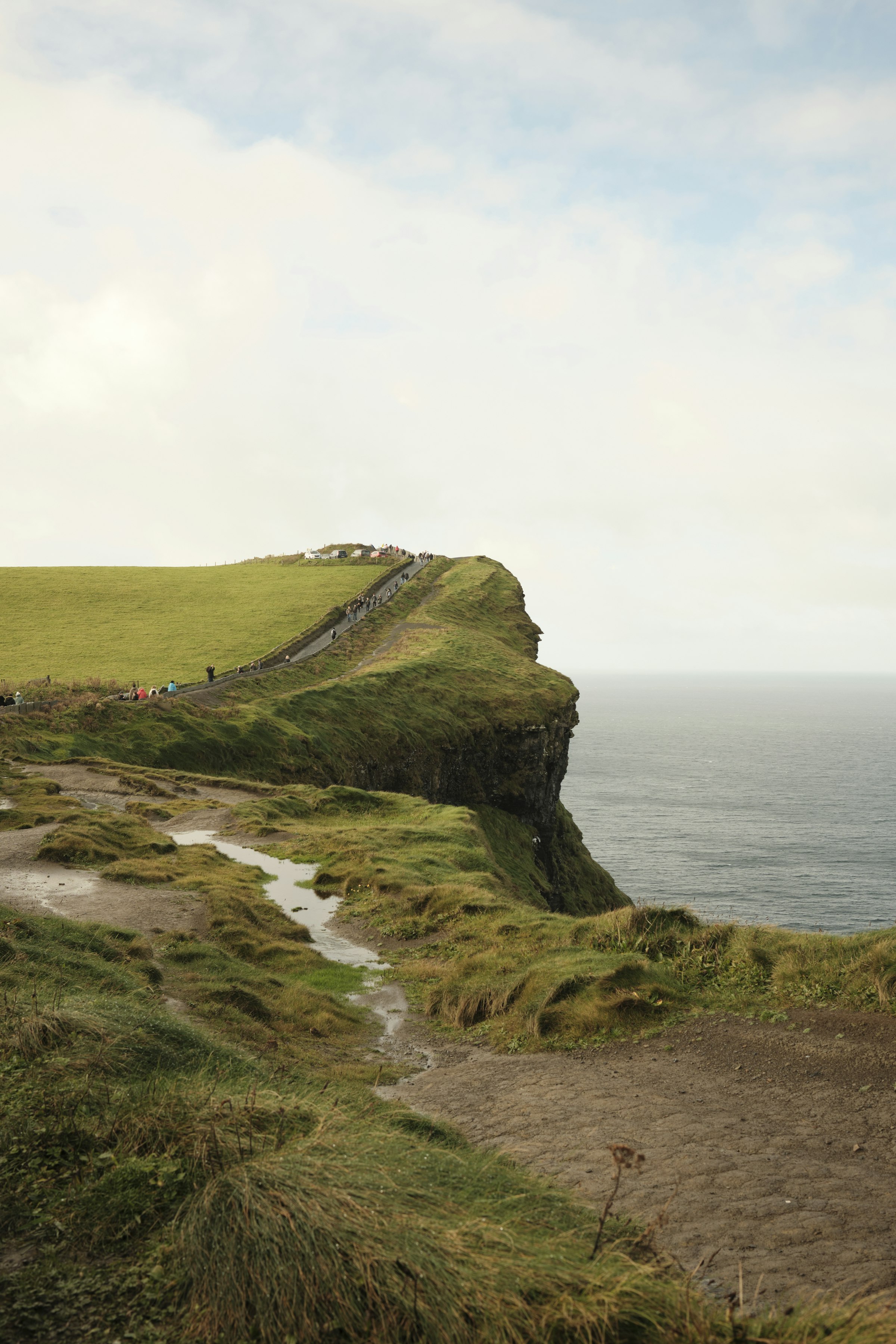
The Cliffs of Moher rise 214 metres at Knockardakin and run for eight kilometres, and yes, they are worth it. Book a timed slot online — walk-ups pay the full €15 gate rate — and take the earliest one you can stomach, because 08:00 in May is a different place entirely from 13:00 in July. Parking is included. In summer the site is open until 21:00, which is the real secret: come back for the last light instead of fighting the middle of the day. Then drive the Burren, a limestone moonscape with Mediterranean orchids growing in its cracks, and stop at Poulnabrone dolmen for a five-thousand-year-old sense of proportion.
Kerry's Slea Head Drive is a 38-kilometre loop out of Dingle past beehive huts, cliff-edge beaches and sheep-related delays you will forgive instantly. Drive it clockwise — the tour coaches run the other way, and meeting one on a single-track bend is nobody's holiday. Do not attempt the descent to Dún Chaoin pier in a hire car. Dingle town, for the record, has moved on from Fungie, who disappeared in October 2020; a DNA study published this month found the old dolphin was a genetic mix of the Shannon Estuary and offshore populations, which is a more interesting epitaph than most.
The Ring of Kerry is famous and busy; the Beara Peninsula next door is neither, and is better. Then the Haven Coast delivers you into West Cork, where the route quietly turns into a food trip — Kinsale's harbour restaurants, Baltimore's oysters, Union Hall's boats. Mizen Head, the south-western full stop, costs around €7.50 and is worth ringing ahead about, since its opening hours shrink to weekends from November.
You pull in not because there's a viewpoint sign, but because your body refuses to keep driving past it.
The detours worth the diversion
Skellig Michael is the great white whale of the Irish itinerary: a sixth-century monastery on a pyramid of rock eleven kilometres out, reached by 618 uneven steps and a boat that only sails between mid-May and the end of September. Fifteen licensed operators carry a maximum of 180 people a day, tickets run €120–€140, minimum age is twelve, and roughly two days in five are cancelled for sea conditions. Book a year out, build in a spare day, and take the non-landing eco tour (€60–€85) as your consolation prize — it's genuinely good.
Get out of the car at least once a day. Beyond the Great Western Greenway, the South Kerry Greenway is opening in stages along the old Killorglin–Valentia railway; about ten kilometres are open now from Glenbeigh, including a hundred-metre elevated boardwalk at Mountain Stage looking over Dingle Bay. It doesn't reach Waterville yet, whatever an older guidebook tells you. And on Cape Clear, a new indoor visitor experience telling the island's story alongside the Fastnet Lighthouse is under construction — but it opens in 2027, so this year the island is still just an island, which is the point.
Where to sleep
The west of Ireland still does the family-run B&B better than anywhere, and at €60–€100 a room with a cooked breakfast, it remains the best value on the route — but book it, because the days of turning up in Dingle in August and finding a bed are over. Mid-range hotels run €100–€160 a night in summer.
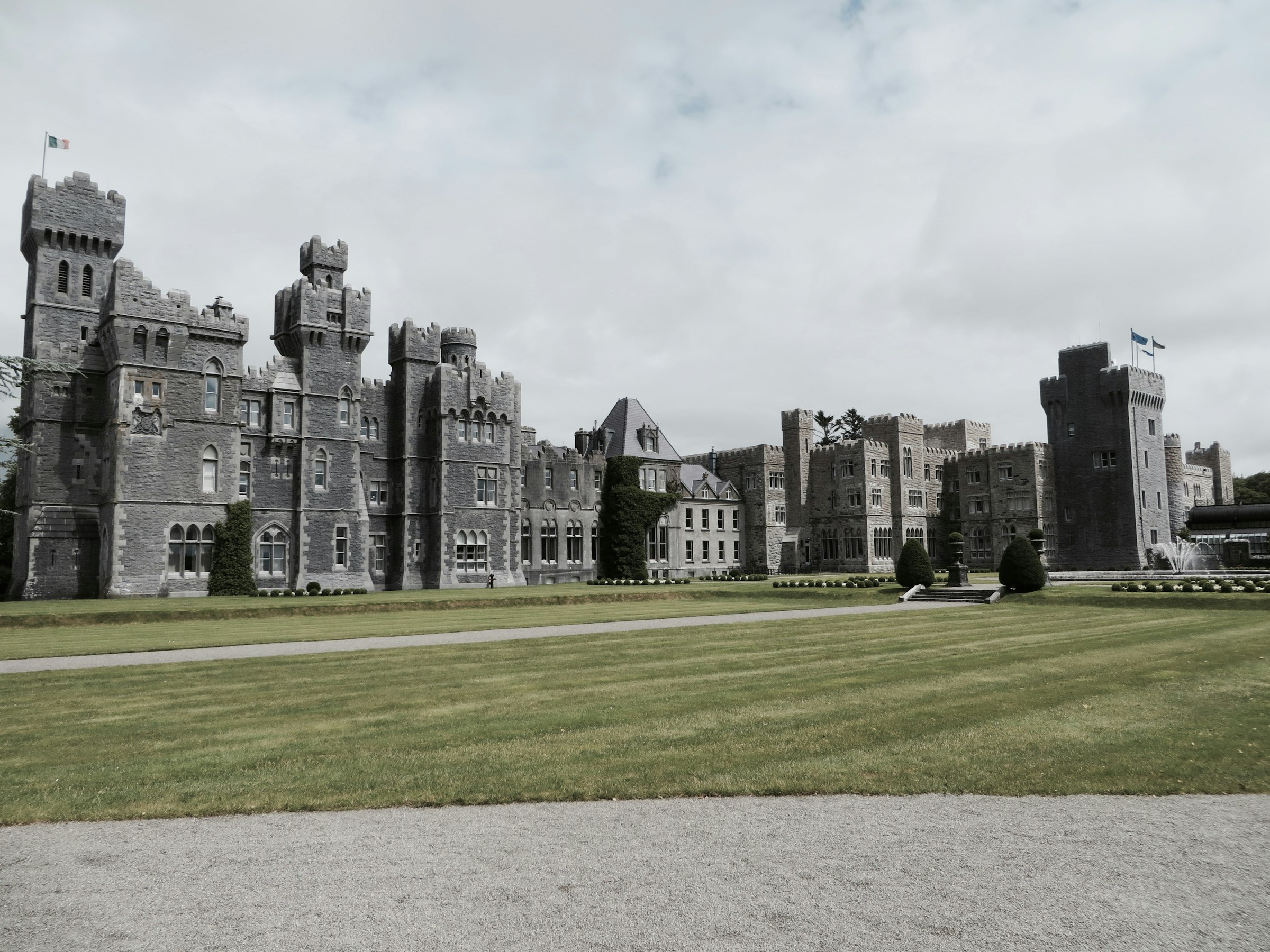
If you're spending properly, do it once rather than nightly. Ashford Castle on Lough Corrib and Adare Manor in Limerick are the two great Irish country-house hotels, and neither publishes a headline rate — expect somewhere north of €500 in the quiet months and comfortably four figures in high season. One night at either, positioned in the middle of the trip, resets the whole holiday.
Driving it: the practical bit
Hire the smallest car you can live with. The lanes are narrow, the bridges are narrower, and the hedgerows have taken more wing mirrors than the insurers will admit. Check the excess before you travel — standalone cover runs about €4 a day against a counter policy that can nearly double the daily rate — and add the second driver, because six hours of Atlantic coast road is not one person's job.
Download offline maps before you leave the last town with a phone mast; coverage in Connemara and west Donegal is best described as theoretical. Fill up when you're at half a tank rather than when you need to, and note that Sunday-evening opening hours in small villages are a matter of local discretion. Drive on the left, take the coastal option every single time, give cyclists the width you'd want, and never overtake on a blind Donegal bend.
Two more small things that make a large difference. First, plan around 150 to 200 kilometres a day, not more — the route is not slow because the distances are long but because you will keep stopping. Second, do the driving in the morning and the walking in the evening; the light on this coast between seven and ten at night in June is the reason people come back.
When to go
May, June and September, in that order. You get long evenings, roads you can actually enjoy, and accommodation at something short of extortion — the shoulder season saves 30–50% on beds and cars alike. July and August are hot, expensive and crowded in Kerry and Clare in a way the west simply wasn't a decade ago.
A word on the weather, because 2026 has been misleading. June was the fourth warmest in 127 years and July the driest on record nationally — but the Atlantic seaboard didn't get the memo. Belmullet in Mayo had its wettest June since 2002, and Malin Head was the only station in the country recording gale-force gusts. National heat records do not translate into west-coast sunshine. Pack for four seasons in one afternoon, bring a proper coat in any month, and treat a clear morning as something to be used immediately rather than admired at breakfast.
What to skip
Skip the compulsion to tick off all 188 Discovery Points; they're a navigational aid, not a checklist. Skip the Ring of Kerry in a rented campervan in August unless you enjoy reversing. Skip the middle of the day at any of the famous sites. And skip the temptation to book every night in advance in high summer — leave the last two open, because the best thing that will happen to you on this road is a village you hadn't heard of on a Tuesday evening, and you want to be able to stay.
The verdict
The Wild Atlantic Way isn't a destination; it's a mood you drive into. It rewards the traveller who does less of it, more slowly — who takes the small road, stops for the shellfish shack, and lets an afternoon go on a beach that wasn't in the plan. Choose one stretch, give it more days than you think it needs, and it will give you a great deal more back.
Going further west? Read our guides to Donegal and West Cork.
Photographs — Cliffs of Moher (hero and in article): Enrico Bizzotto on Unsplash. Kylemore Abbey: Max Sandelin on Unsplash. Ashford Castle: Shanna Beasley on Unsplash. Connemara: via Unsplash, photographer unidentified — if it's yours, tell us and we'll credit you.
You Might Also Like
The latest from The Moiré Edit.