What Irish Creators Actually Get Paid
Locked out of TikTok's payout scheme while British and German creators are not. Taxed at 52 per cent on the gift bag. A third of deals not paid in money at all. Part two of our series on the Irish influencer scene.
Start with the number that should not be true.
An Irish creator with 500,000 TikTok followers cannot earn a cent from TikTok's view-based payout scheme. A British creator with the same audience can. So can a French one, a German one, a Japanese one and a Brazilian one.
TikTok's Creator Rewards Programme — the thing that pays out on qualifying views — has never been available in Ireland. TikTok does not publish a rate for it anyway, but the eligibility list is the point: TikTok's own Creator Academy names the United States, the United Kingdom, France, Germany, South Korea, Japan and Brazil. Ireland has never appeared on it.
This is the foundation of everything that follows. Irish creators do not get paid for being watched. They only get paid for being hired, or for selling something. And that single structural fact shapes the entire Irish scene — the volume of sponsored content, the pressure to accept gifting, the reliance on agencies, and the reason your feed feels like a shop.
So what does get paid in Ireland?
YouTube does. The Partner Programme is available in the Republic, and the splits are published: creators keep 55 per cent of long-form ad revenue and 45 per cent on Shorts. Note that the ladder is being pulled up — from 1 February 2027 the threshold rises to 8,000 qualified watch hours in a year, or 20 million Shorts views in 90 days.
TikTok Shop does, since arriving in Ireland in December 2024 — and it now deserves a section of its own, further down.
And brands do. Which is the whole game.
The Irish rate card, such as it is
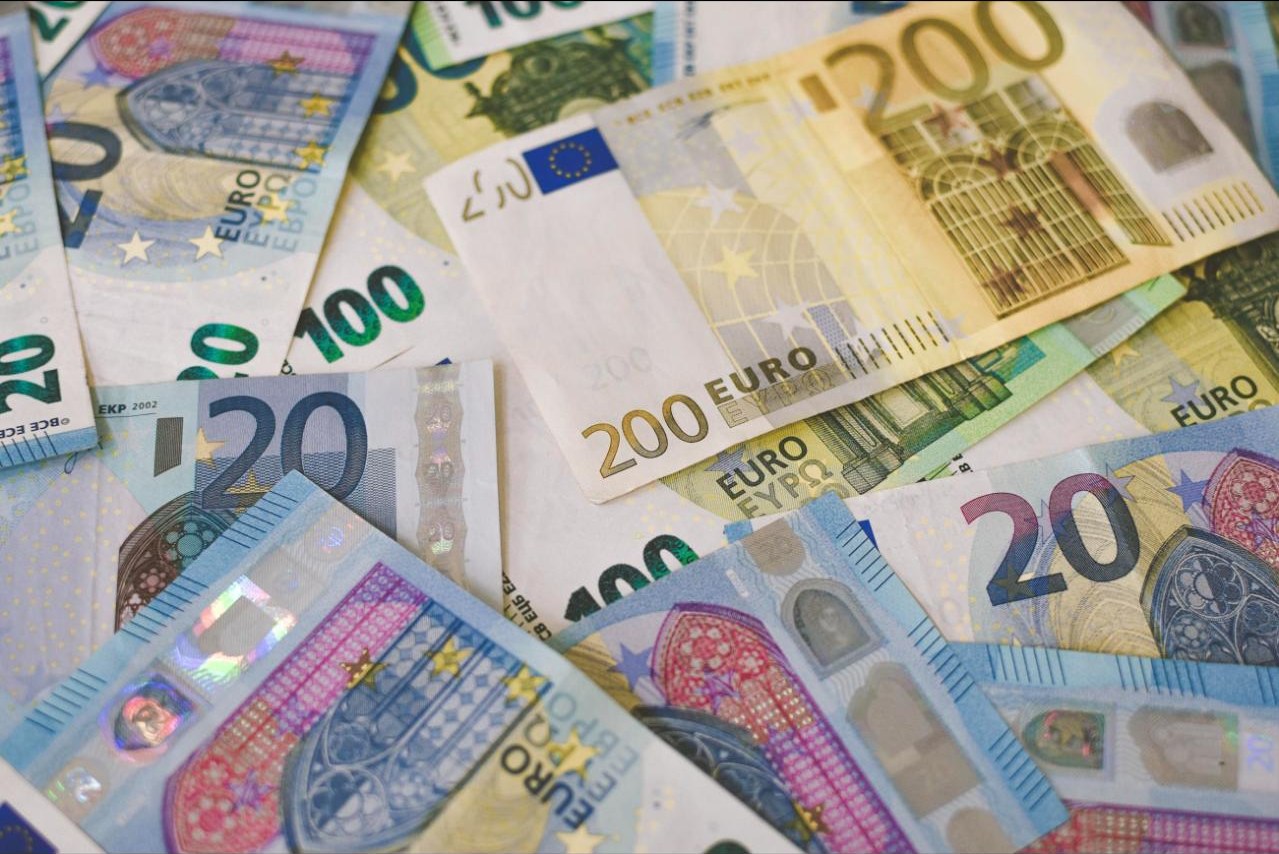
No Irish agency publishes rates. The best public reporting, from early 2024, put client budgets at €2,000 to €40,000-plus per campaign, with a typical campaign in the €2,000–€15,000 range and creators taking two to four campaigns a month. At the top of the market, a single Instagram Story was reported at around €3,000 and a Reel at around €12,000.
Miriam Mullins — 2.2 million TikTok followers — has put her own figure on the record: approximately €2,000 per TikTok video, varying with the brand's budget, plus monthly advertising payments. She is self-employed and does her own tax.
Filed company accounts show where this goes at the very top. Suzanne Jackson's company posted a net profit of €1.8 million in 2021 with personal pay of €630,900. Lisa McGowan took €940,000 in personal pay in a recent year. Vogue Williams's media company reported post-tax profits above €550,000.
Now the correction, and it is a big one.
Almost nobody earns that
Global transaction data covering more than 21,000 collaborations in 2025 gives the average cost of a single brand collaboration as $255 on YouTube, $193 on Instagram, $186 on TikTok. Nearly 80 per cent of all brand collaborations cost under $300. Only 2 per cent exceed $1,000.
What a deal is actually worth
The average brand collaboration costs less than a weekly shop
Average cost of a single brand collaboration in 2025, by platform, across more than 21,000 collaborations.
YouTube
$255
$193
TikTok
$186
UGC video
$154
Twitch
$127
Amazon
$88
X (Twitter)
$76
Nearly 80% of all brand collaborations cost under $300. Only 2% exceed $1,000.
Source: transaction-level industry dataset covering 21,000+ collaborations in 2025. Figures in US dollars as published.
Read that against the €12,000 Reel and you have the shape of this industry. It is not a career ladder. It is a lottery with a very visible winner's enclosure.
The distribution data confirms it. Across roughly 14,400 creators paid through campaigns in 2025, average earnings were $11,400 — but the median was $3,000. The top 10 per cent of creators took 62 per cent of all payments, up from 53 per cent in 2023. The top 1 per cent took 21 per cent.
Average versus median
The average creator earning is a mirage
Payments to roughly 14,400 creators through brand campaigns in 2025.
Average
$11,400
Payment per creator — pulled upward by a very small number of very large deals.
Median
$3,000
Payment per creator — what the creator in the middle actually received.
Quote the average and you describe a career. Quote the median and you describe a side income.
Source: industry analysis of creator compensation, 2025 data. Figures in US dollars as published.
Where the money goes
The top tenth of creators take almost two thirds of it
Share of all creator payments in 2025, across roughly 14,400 creators paid through brand campaigns.
21% of all payments went to the top 1% of creators
41% went to the next 9%
38% was shared by the other 90%
The top 10% took 62% of all payments — up from 53% in 2023. Concentration is increasing, not easing.
Source: industry analysis of creator compensation, 2025 data. Figures are global.
The money is not just concentrated. It is concentrating faster.
Where the value quietly leaves the room
Here is the part creators tell you about privately and rarely post about.
77 per cent of brands repurpose creator content in their own paid advertising. And 67 per cent build those usage rights into the creator's original fee — meaning no separate payment for it. When brands do pay separately, 43 per cent pay under $500.
To see how far below market that is, consider what the rights are actually worth. UK agency pricing guidance sets usage multipliers on top of the base fee: from 100 per cent for UK-only territory up to 450 per cent for worldwide; from 25 per cent for three months up to 100 per cent for a year; from 75 per cent for social-only up to 200 per cent for all digital.
So a creator's content can be run as a brand's advertising, worldwide, for a year — and the creator is very often paid nothing beyond the original post fee. Transaction data suggests adding usage rights lifts the price by roughly 40 per cent in practice. The multipliers say it should be several times that.
Whitelisting is the same story: 80 per cent of influencers have been asked to let a brand run ads through their handle. Only 51 per cent charge anything for it.
And a third of it is not money at all
In the largest crowdsourced study of influencer deals, 31 per cent of brand exchanges involved gifting rather than cash.
Academic work out of the University of Bath is blunt about where that leads: most creators are "doing it for free, or settling for gifts-in-kind or promises of future exposure." One UK agency's published position is that no brand should expect content at all when the exchange is gifting only, warning that gifting-only arrangements "belittle the industry."
It is worth being fair here. Gifting is how almost everyone starts, and for a nano creator a €300 hamper is a real thing. The problem is not that gifting exists. The problem is that it does not stop.
Who gets paid less, and it is not random
Ireland has no published research on this. The UK and US do, and the findings are consistent enough to be worth stating.
Peer-reviewed analysis of 668 crowdsourced Instagram deals found influencers of colour were more than six times more likely to perform entirely unpaid work — 3.2 per cent of exchanges against 0.5 per cent for white influencers. They also negotiated more often and succeeded less: 38.6 per cent success against 50 per cent.
UK agency data from 2024 found that against white influencers, Black influencers earned 34 per cent less, South Asian influencers 31 per cent less and East Asian influencers 38 per cent less. An earlier edition put the overall gap at 18.7 per cent and found 57 per cent of respondents believed their ethnicity contributed to lower fees.
On gender, transaction data for 2025 has men averaging $205 per engagement and women $166 — a gap of about 24 per cent — while women make up roughly 72 per cent of all influencers.
The gap nobody has measured in Ireland
Women are most of the industry and are paid less per job
Average payment per engagement in 2025. This is global transaction data — no equivalent Irish study exists.
Men
$205
Women
$166
A gap of about 24% — and women make up roughly 72% of all influencers.
Source: transaction-level industry dataset covering 2025, in US dollars as published. We could find no Irish pay-equity research at all.
None of this is Irish data. We could not find any. That absence is itself worth noting: an industry this large in Ireland has never, as far as we can establish, been studied for pay equity here at all.
One more figure, from a survey of UK creators: 69 per cent believe they undercharge. Only 22 per cent feel confident setting a price.
Getting paid, eventually
56 per cent of creators report late payment. Standard terms run 30 to 90 days after invoice; some campaigns take six months or more. The UK industry code of conduct addresses this by asking parties to "make every effort not to let payment drift" — which is not a payment term, it is a wish.
The one place Ireland does get paid
There is an exception to all of this, and it is growing quickly enough to deserve its own section.
TikTok Shop arrived in Ireland in December 2024. In May 2026, TikTok's Irish newsroom reported that it had paid more than €2 million in commission directly to Irish creators since launch, that the number of Irish creators on its affiliate programme had risen by 600 per cent, and that Irish seller numbers were up by triple digits.
The one pipe that pays
TikTok will not pay Irish creators for views. It will pay them for sales.
TikTok Shop Ireland, as reported by TikTok's Irish newsroom in May 2026.
Commission paid
€2m+
Paid directly to Irish creators since launch.
Creator growth
600%
Increase in Irish creators on the affiliate programme.
Launched
Dec 2024
Irish seller numbers up by triple digits since.
Per creator
Unknown
TikTok does not publish how many creators shared the €2m, so no per-creator figure can be calculated.
These are TikTok's own figures, unaudited, published by a company with an obvious interest in Irish sellers signing up.
Source: TikTok Newsroom Ireland, 21 May 2026.
That last box matters. Two million euro spread across a creator cohort that grew six-fold tells you nothing whatsoever about what any individual made, and we are not going to divide one by the other and pretend it means something.
What is more useful is who is actually buying.
Who is actually buying
The biggest TikTok Shop cohort in Ireland is 46 to 61
Share of Irish TikTok Shop shoppers by age group, from Nielsen IQ data cited by TikTok.
46–61
37%
30–45
34%
18–29
27%
Bars are scaled to the largest group. The under-thirties — the audience TikTok is sold on — are the smallest share of the people spending.
Source: Nielsen IQ data, cited by TikTok Newsroom Ireland, May 2026.
That should stop a few media plans in their tracks. TikTok is pitched to Irish brands as reach into the under-thirties. On its own shopping platform, in this country, the largest single buying cohort is 46 to 61 — older than both other groups, and the cohort most Irish creators are not making content for.
The rest of the picture is small-nation stuff, and rather charming: #ShopIrish content doubled over the year, #Claddagh grew by 200 per cent, and TikTok ran a matchmaking event in Dublin on 14 May pairing 25 Irish brands with more than 150 creators.
But notice what the whole arrangement does to the incentive. An Irish creator cannot be paid for being watched. She can be paid for selling. So the commercial density of an Irish feed — the thing viewers complain about constantly — is not a moral failing or a personality defect. It is the only door the platforms have left open.
The taxman has already worked all this out
If there is one section of this series that Irish creators should read twice, it is this one.
Revenue published two guidance manuals in July 2025, and their position is unambiguous. Income from social media is taxable "even in circumstances where the activity is conducted on a casual basis only." There is no threshold below which it stops counting. Affiliate commission is income like any other.
Gifted goods are the sting. Unsolicited product you do not post about is not income tax — but the moment you reciprocate with promotion, it is taxable income, contract or no contract, valued at fair market value. A brand ambassador given a car for a year declares the car. A creator accepting a €5,000 resort stay at the top marginal rate of 52.1 per cent is looking at a liability of roughly €2,605 on a holiday they were told was free.
And clothing, grooming and personal consumption are generally not deductible.
What Revenue has already collected
The gift bag is taxable, and they are already checking
Irish Revenue enforcement against social media creators, as reported following its July 2025 guidance.
Unpaid tax recovered
€3.3m
Collected from social media creators, plus nearly €1m more in interest and penalties.
Interventions
145
With more than 450 letters issued since 2023. One OnlyFans creator settled for over €350,000.
Top marginal rate
52.1%
A €5,000 resort stay accepted in exchange for promotion carries a liability of roughly €2,605.
Where it starts
€0
There is no threshold. Income is taxable “even in circumstances where the activity is conducted on a casual basis only.”
Revenue’s chairman, on the record: “If you’re doing it, we will know about it.”
Source: Revenue Tax and Duty Manuals, July 2025, and subsequent Irish reporting of enforcement figures.
This is not theoretical. Revenue collected €3.3 million in unpaid tax from social media creators, plus nearly €1 million in interest and penalties, across 145 interventions. More than 450 letters have gone out since 2023. One OnlyFans creator settled for over €350,000. Revenue's chairman put it plainly: "If you're doing it, we will know about it."
The thresholds, for the avoidance of doubt: under €5,000 goes on a Form 12; €5,000 or more means registering as self-employed and filing a Form 11 by 31 October; VAT registration bites at €42,500.
And the label on the tin
Ireland's advertising rules are stricter than most people posting realise. If you benefit in any way — cash, commission, product, a trip, an event invitation, "any other type of benefit" — the content is commercial and must be labelled. That includes affiliate commission on a TikTok Shop link.
The label must be the first word in the text block, at the start of a video with verbal disclosure, in high contrast, on every post. Not at the end. Not behind "see more." #Ad, #Fógra, #Gifted, #Féirín, #BrandAmbassador and the platform's own paid-partnership tool all qualify.
Crucially, #Gifted only covers genuinely unsolicited product where the brand did not ask you to post and did not shape what you said. If they asked, it is #Ad. The guiding principle in the official guidance is four words long: if in doubt, label it.
The uncomfortable conclusion
Irish creators work in a market where the platform pays them nothing for attention, brands increasingly take their content as advertising for free, roughly a third of deals are not cash at all, the top tenth take almost two thirds of the money, and Revenue taxes the gift bag at 52 per cent. The one growing exception pays them only when they sell you something.
The wonder is not that some of them push too hard on sponsored content. The wonder is that the good ones manage not to.
This is part of our series on the Irish influencer scene — who Ireland is actually listening to, and who is paying for it.
- The Agencies: Who Represents Irish Creators, and What They Take — Five Irish agencies, one published fee model between them, and the question of whether it is still who you know.
- Does Any of It Actually Work? — The industry’s favourite statistic traces back to nowhere, and not one published Irish campaign result reports a sale.
- Influencer or UGC Creator? The Reclassification Changing Everything — The fastest-growing job in Irish social media is the one where nobody knows your name.
- The Top 18 Irish Creators, Ranked on What Can Actually Be Proved — Live follower counts read on the day, filed accounts, and a ranking in which the biggest account finishes fourth.
A note on the sourcing
Platform revenue shares and eligibility thresholds are as published by the platforms themselves. TikTok Creator Rewards country eligibility is taken from TikTok's own Creator Academy, which names the United States, the United Kingdom, France, Germany, South Korea, Japan and Brazil; Ireland is not among them. TikTok Shop commission, creator growth, seller growth, the Dublin matchmaking event and the hashtag figures are from TikTok's Irish newsroom of 21 May 2026, and the age breakdown of Irish TikTok Shop shoppers is Nielsen IQ data cited in that same release — all of it TikTok's own reporting, unaudited by us. Irish campaign rates are from Irish trade reporting of February 2024 and will have moved. Miriam Mullins's per-video figure is her own, given in a published interview. Company figures are from filed accounts as reported in the Irish press. Global collaboration averages and earnings distribution are from transaction-level industry datasets covering 2025, and are in US dollars as published. Pay-gap findings are UK and US research, clearly identified as such, because no equivalent Irish study exists. Revenue's position, thresholds and enforcement figures are from its published Tax and Duty Manuals of July 2025 and subsequent Irish reporting. Advertising labelling requirements are from the joint industry guidance in force in Ireland. The graphics are our own, built from the figures cited above. The photograph is used under the Unsplash Licence, by Onur Binay.
You Might Also Like
The latest from The Moiré Edit.