Influencer or UGC Creator? The Reclassification Changing Everything
The fastest-growing job in Irish social media is the one where nobody knows your name - and an Irish influencer agency has already built a business selling content without influencers attached. Part five of our series.
There is a job in Irish social media now where the whole point is that nobody knows who you are.
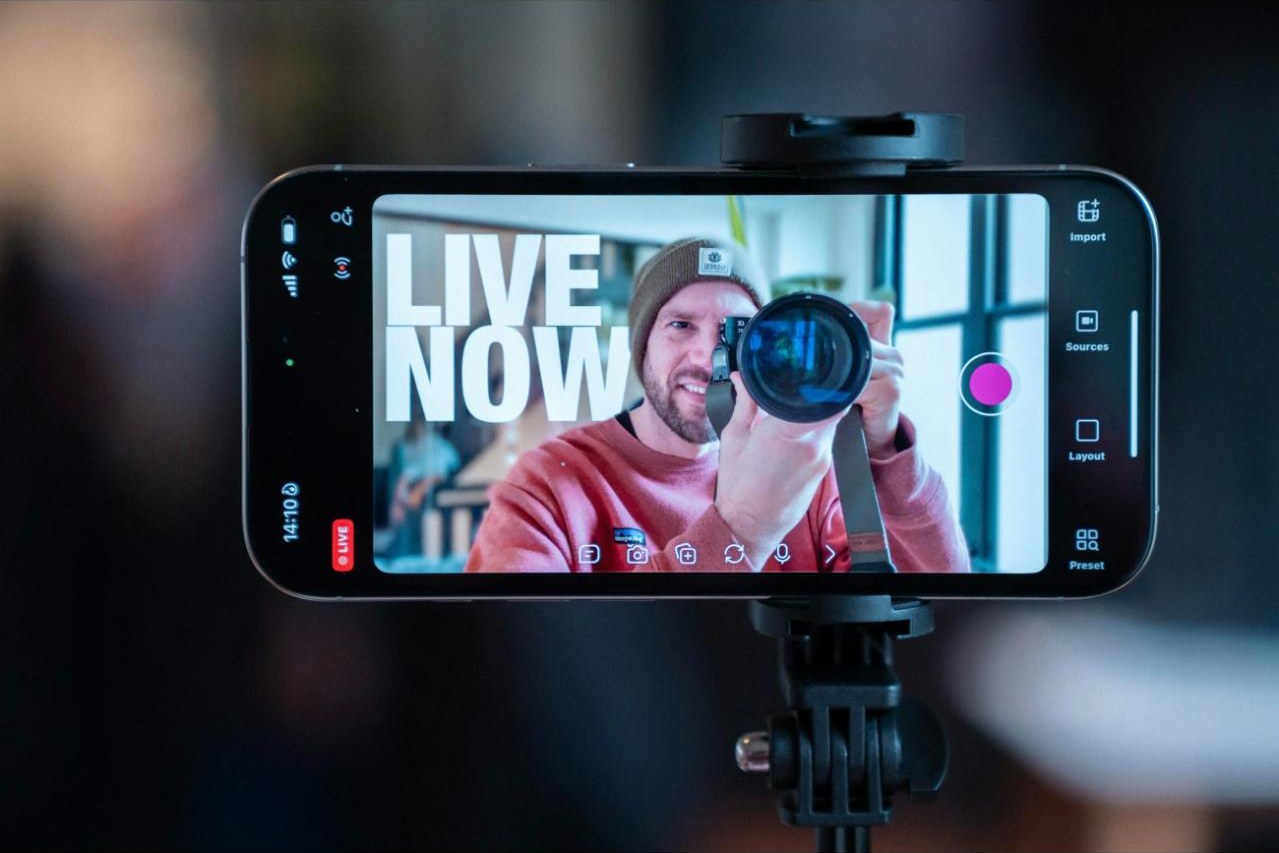
You film yourself using a product in your kitchen. You send the file to the brand. The brand posts it on their account, or runs it as an advertisement. Your name is not on it. Your face might be, but your handle is not. And your follower count — the number the entire industry is supposedly built on — is completely irrelevant.
This is UGC creation, and it is the fastest-moving part of the market. In 2025, UGC campaigns grew 133 per cent year on year while TikTok influencer campaigns fell 48 per cent.
If you are trying to work out where Irish social media is going, that pair of numbers is the whole story.
The shift
One of these grew by 133%. The other fell by half.
Year-on-year change in campaign volume, 2025. The line down the middle is zero.
UGC campaigns
+133%
TikTok influencer campaigns
−48%
A UGC video averages $154. An influencer post from a 50,000-follower account starts around $500.
Source: transaction-level industry dataset covering 21,000+ collaborations in 2025.
The four things people mean by "influencer"
Ireland's advertising regulator uses "influencer" as an umbrella for "influencers, content creators, online personalities, online streamers, bloggers/vloggers, celebrities, or media personalities" — and, remarkably, notes it applies to human, virtual or animal personas alike. Useful for enforcement. Useless for understanding what anyone actually does.
Commercially, there are four distinct jobs.
The influencer is paid for reach. The content goes out on their channel, to their audience, under their name. Price scales with followers. This is what most people picture, and it is the model under most pressure.
The content creator is the same job with a better name. Creators overwhelmingly prefer the term; the trade and the tax authority prefer "influencer." The distinction is cultural, not commercial — though it tells you something that the people doing the work want a word that describes making things rather than manipulating people.
The brand ambassador is a longer, usually exclusive relationship rather than a one-off post. Ireland has an unusually concrete definition of what this means, courtesy of Revenue: a brand ambassador given free use of a car for a year must declare the car as income, valued at the market leasing equivalent. Nothing clarifies a commercial relationship like being taxed on it.
The UGC creator is the genuinely different one. They are not a media channel. They are a production unit that looks like a person.
Four jobs, not one
What a brand is actually buying in each case
The regulator treats all of these as one category. Commercially they are nothing alike.
Paid for reach
The influencer
Posts on their own channel, under their own name. Price scales with followers. The model under most pressure.
Paid for the relationship
The brand ambassador
Longer and usually exclusive. In Ireland, a year’s free use of a car must be declared as income at the market leasing equivalent.
Paid for the asset
The UGC creator
Films the content and hands over the file. Follower count is irrelevant. Not a media channel — a production unit that looks like a person.
“Content creator” is the influencer’s own preferred name for the same job. The distinction there is cultural, not commercial.
Source: the influencer advertising guidance in force in Ireland, Revenue’s July 2025 tax guidance, and industry rate documentation as cited below.
What UGC actually pays
Platform data puts a single UGC video at $150 to $212 on average, with a median around $175 and a range from $100 to upwards of $500. Bundles attract discounts — five or more videos, 15 to 25 per cent off. Usage rights add 30 to 50 per cent. Raw footage, another 30 to 50 per cent. Extra hook or call-to-action variations, around $50 each.
The direct comparison offered by the same source is instructive: a UGC video at $150–$300, against an influencer post from a 50,000-follower account at $500–$1,500 or more.
The same video, two prices
What the audience costs, on top of the content
Published rate guidance from a UGC marketplace, which is a self-interested source and is flagged as such.
A UGC video
$150–300
The file, handed over. Roughly 80% of UGC creator costs fall below $500, and the average UGC engagement in 2025 cost $154.
An influencer post
$500–1,500+
From a 50,000-follower account, posted to that account. The difference is the audience, not the work.
“UGC rates are based on the deliverables and the creator’s skill. Influencer rates, on the other hand, are all about reach.”
Source: UGC marketplace rate documentation, and an independent transaction dataset covering 21,000+ collaborations in 2025. Figures in US dollars as published.
From the buyer's side, roughly 80 per cent of UGC creator costs fall below $500. And across all collaboration types in 2025, the average UGC engagement cost $154 — the cheapest of every category measured except Amazon and X.
The framing that platform uses is the cleanest summary anyone has offered: "UGC rates are based on the deliverables and the creator's skill. Influencer rates, on the other hand, are all about reach."
Why brands moved, in three numbers
This did not happen because brands went off influencers. It happened because of arithmetic.
One. 77 per cent of brands repurpose creator content in their paid advertising — meaning what they actually wanted, in most cases, was never the audience. It was the asset. Creator content now makes up an average of 44 per cent of brands' paid media creative, and 92 per cent of paid media leaders use it.
Two. Influencer fees are climbing. Agencies reported some creators doubling their rates from 2024, with 50 to 100 per cent premiums for fast turnarounds, and overall influencer spend up 30 to 40 per cent in 2025. "Rising creator costs" is now the single leading challenge named by marketers, cited by more than a third.
Three. If you can buy the asset without the audience for $154, and you were only ever going to run it as an ad anyway, the audience was an expensive bundled extra.
Why brands moved
What they wanted was never the audience. It was the asset.
Use of creator-made content inside brands’ own paid advertising.
Paid media leaders using creator content
92%
Brands repurposing it as paid advertising
77%
Share of paid media creative it now makes up
44%
If you were only ever going to run it as an advertisement, the audience was an expensive bundled extra.
Source: vendor-commissioned marketer surveys, identified as such in the sourcing note below.
One agency executive put the shift plainly: "We're not just paying for the content anymore; we're paying to use their content across multiple channels."
Ireland already has this business
In February 2024, the group behind The Collaborations Agency — one of Ireland's largest influencer agencies — launched a separate operation called Social Content HQ, working with more than 70 creators to produce banks of assets that brands publish themselves. Six full-time staff. Packages from €1,500. A first-six-months turnover target of €500,000.
Read that again. An Irish influencer agency built a business that sells brands content without influencers attached.
Its founder's reasoning is entirely reasonable: "Every brand needs content more than ever, and we're happy to supply that to them. Not everybody has the time to create this content." True, and commercially astute. It is also the clearest possible signal about where the professionals think the risk sits.
What this means if you are trying to do this for a living
The good news is real. UGC has no follower barrier. You do not need an audience, a personal brand, or the stomach for being recognised in Tesco. If you can light a kitchen counter and speak to a phone without sounding like a hostage, you can be paid. For anyone who wanted the work but not the exposure — and there are many, particularly women who have watched what online attention does — that is a genuine door opening.
The bad news is that you are now competing on price for a commodity, against everyone else who can also light a kitchen counter. The rate data shows exactly what that market does: UGC rates fell more than 44 per cent year on year in one dataset even as volumes grew. Cheap and growing is not a contradiction. It is what commoditisation looks like.
And the middle tier is where it bites. If you have 40,000 followers, your value proposition has historically been reach. But brands are simultaneously expanding into nano and micro creators — around 51 and 53 per cent respectively plan to increase use — while macro creator use stays flat. Nano creators are 87.7 per cent of all TikTok influencers, and engagement falls as follower count rises. Big enough to be expensive, not big enough to be unavoidable, is the worst place to stand.
Where the squeeze lands
Brands are expanding at the bottom, not the middle
Share of brands planning to increase their use of each creator tier.
Micro creators
53%
Nano creators
51%
Macro creators
Flat
Nano creators are 87.7% of all TikTok influencers, and engagement falls as follower count rises. Big enough to be expensive, not big enough to be unavoidable, is the worst place to stand.
Source: vendor-commissioned marketer surveys and platform creator-tier data. “Flat” is reported as no planned change rather than a percentage, and is drawn here at a nominal width.
The labelling rules do not care what you call yourself
One practical warning, because this catches people.
UGC does not exempt anyone from disclosure. Ireland's rules trigger on benefit, not on job title: cash, commission, product, trips, event invitations or "any other type of benefit." If a brand runs your content as an ad on their channel, the brand carries the disclosure obligation — and the regulator has been explicit that primary responsibility for the recognisability of paid marketing rests with brands and advertisers.
If you also post it yourself, it is yours to label. #Gifted only covers unsolicited product where the brand neither asked you to post nor shaped what you said. Everything else is #Ad, first word, every time.
The uncomfortable read
For fifteen years the pitch was that social media had removed the gatekeepers — that anyone with a phone and a personality could build an audience and turn it into a living.
The first half held. The second half is quietly being unwound. What brands increasingly want is the phone and not the personality: the content without the person, the asset without the audience, at a fifth of the price and with none of the risk that the creator says something inconvenient on a Tuesday.
That is not the end of influencing. The people at the top — the ones with genuine authority in a category, the ones people actually believe — are getting more expensive, not less, and the research says larger creators still move purchase intention in a way small ones do not.
But the broad middle, the tens of thousands of accounts with respectable followings and no particular expertise, is being competed with by people doing the same work anonymously for $154 a video. If you are in that middle, the question worth sitting with is not how to grow your following.
It is what you are for.
This is part of our series on the Irish influencer scene — who Ireland is actually listening to, and who is paying for it.
- What Irish Creators Actually Get Paid — Locked out of TikTok’s payout scheme, taxed on the gift bag, and a third of deals not paid in money at all.
- The Agencies: Who Represents Irish Creators, and What They Take — Five Irish agencies, one published fee model between them, and the question of whether it is still who you know.
- Does Any of It Actually Work? — The industry’s favourite statistic traces back to nowhere, and not one published Irish campaign result reports a sale.
- The Top 18 Irish Creators, Ranked on What Can Actually Be Proved — Live follower counts read on the day, filed accounts, and a ranking in which the biggest account finishes fourth.
A note on the sourcing
The regulator's umbrella definition and the disclosure requirements are from the influencer advertising guidance in force in Ireland. The brand ambassador car example is from Revenue's July 2025 tax guidance as reported in the Irish press. UGC rate benchmarks come from a UGC marketplace publishing its own platform data, which we flag as a self-interested source; the cross-category collaboration averages come from an independent transaction dataset covering more than 21,000 collaborations in 2025 and are in US dollars as published. Growth and decline percentages for UGC and TikTok campaigns are from that same dataset. Figures on repurposing, paid-media creative share, creator-tier intent and marketer intent generally are from vendor-commissioned surveys and are identified as such. Social Content HQ's staffing, pricing and turnover target are as reported in Irish business coverage of its launch, and the founder's quotations are as published there. The graphics are our own, built from the figures cited above.
You Might Also Like
The latest from The Moiré Edit.