€348 Million Later: What Ireland's Vacant House Grant Actually Pays
Six empty homes come back into use every working day. The grant is four years old, it has paid out €348.6m on 6,312 houses, and it has grown a second grant worth €135,000 that 37 people have claimed.
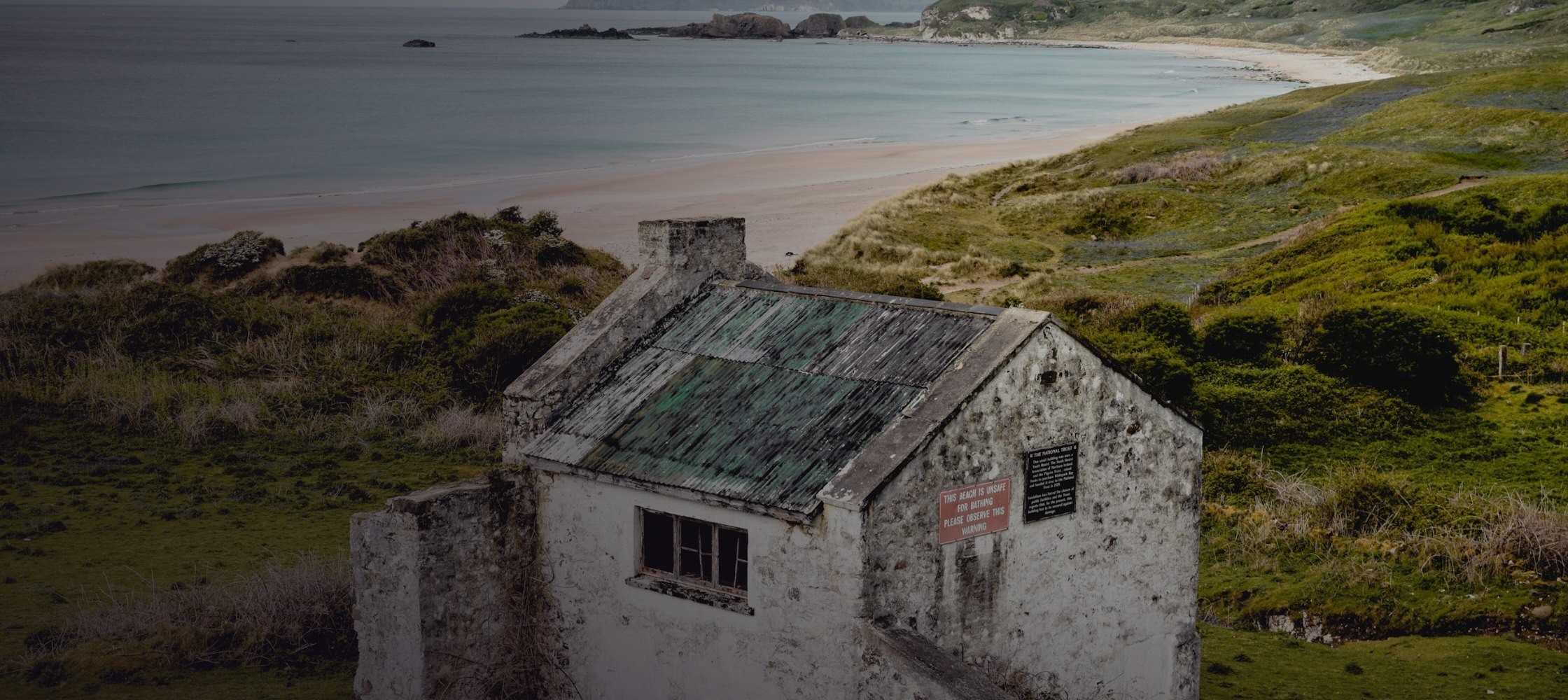
A run-down house on a green hillside. Photo: aestelle / Unsplash.
Six previously vacant properties are being brought back into use every working day in Ireland. That is not a campaign slogan. It is the Minister for Housing describing his own department’s figures.
“Six previously vacant properties are being brought back into active use every working day across Ireland. This is what I want to see.”
James Browne TD, Minister for Housing, Local Government and Heritage, 17 July 2026
The Vacant Property Refurbishment Grant is four years old this summer. It has now paid out €348,617,466 on 6,312 completed homes, it has been extended to 2030, and it has quietly grown a second grant worth up to €135,000 that almost nobody has claimed.
Here is what it actually pays, what it actually demands, and where the money has actually gone.
THE VACANT PROPERTY REFURBISHMENT GRANT
Four years in
MAXIMUM, VACANT
€50,000
For a property built before 2008 and empty for at least two years.
MAXIMUM, DERELICT
€70,000
The €50,000 plus a €20,000 top-up, if the building is structurally unsound.
HOMES COMPLETED
6,312
Grants paid on completion, scheme launch to 30 June 2026.
PAID OUT
€348.6m
Total value paid to 30 June 2026.
Source: Department of Housing, Local Government and Heritage, Q2 2026 statistics, published 17 July 2026.
What you can actually get
The headline numbers are €50,000 and €70,000, and for most people that is the whole scheme. But the ladder goes considerably higher if the building is on an island, or if it is a former shop or office being turned into more than one home.
THE FULL LADDER
Every rate, August 2026
ISLANDS, VACANT
€60,000
Off-shore islands carry a higher rate to reflect the cost of building there.
ISLANDS, DERELICT
€84,000
The island rate with the dereliction top-up applied.
COMMERCIAL, 3+ UNITS
€90,000
A vacant former commercial or public building converted into three or more homes.
AND IF DERELICT
€110,000
The same conversion, where the building is also structurally unsound.
Source: gov.ie, Vacant Property Refurbishment Grant, page updated 26 August 2026.
The sentence worth €20,000
The difference between €50,000 and €70,000 is one word: derelict. And the definition is narrower than most applicants expect.
To unlock the top-up, the property must be structurally unsound and dangerous. You prove that in one of two ways — an independent report from a suitably qualified professional, or the building already being entered on your local authority’s Derelict Sites Register. A house that is simply cold, damp, unloved and forty years out of date is vacant, not derelict.
Vacancy itself is looser, and that is worth knowing. Neither gov.ie nor the local-authority scheme documents offer a tidy prose definition. South Dublin County Council’s scheme outline, published in March 2026, sets the test as utility bills “or such other proofs as are available, to the satisfaction of the local authority”. It is an evidential test, not a definitional one — which is precisely why practice varies from council to council, and why it is worth asking yours what it will accept before you assemble a file.
Where the money has gone
THE COUNTIES
Cumulative to 30 June 2026
DONEGAL
1,638
Applications received — the highest in the country. €30,940,064 paid.
CORK COUNTY
1,634
Second on applications, with €25,512,984 paid.
MAYO
1,061
Third on applications received.
TIPPERARY
€19m
€19,028,915 paid out, among the highest in the State.
Source: Department of Housing, Q2 2026 Vacant Property Refurbishment Grant Statistics.
The geography is the story. This is not a Dublin scheme. It is a scheme for the parts of Ireland where a house can sit empty for a decade because the arithmetic of doing it up never worked — and where €70,000 changes that arithmetic completely.
The Irish Times reported in June 2025 that in nine counties — Leitrim, Roscommon, Donegal, Sligo, Cavan, Mayo, Kerry, Tipperary and Monaghan — grant applications in 2024 outnumbered new homes built. In Leitrim there were 223 grant applications against 120 homes built.
John and Amanda O’Connell used the €50,000 grant on a vacant family house at Cloverhill, Ballinamore, Co. Leitrim — insulation, underfloor heating, a rewire, a replumb, and an A3 energy rating at the end of it.
“I don’t know if we would have taken on this project, if we didn’t have this grant.”
John O’Connell, speaking to The Irish Times, June 2025
The grant nobody has claimed
In December 2025 the Department announced the scheme would continue to 2030, and created a second one alongside it: the Vacant Above the Shop Grant, which opened on 31 March 2026.
It is worth more than the original. One home above a commercial premises attracts up to €95,000; two homes up to €115,000; three or more up to €135,000, with up to €5,000 on top for advisory services. On the islands those figures rise again, to €162,000 at the top.
By 30 June 2026 it had received 37 applications in total.
“I have been very clear about my position on vacancy and dereliction. They are a blight on our village and town communities, but they also represent an opportunity for new homes.”
James Browne TD, 16 December 2025
Thirty-seven. For a grant of up to €135,000, in a country with an empty first floor above a very large proportion of its main streets. The commercial use has to remain, the residential part has to have been vacant two years, and it is one grant per building — but none of that explains a number that small. It is the most under-used housing measure in the State.
The catch, and it lasts ten years
The grant is not a gift. A charge goes on the property for ten years, and if you sell up or stop living in it — or stop renting it out — inside that window, you pay some of it back.
THE CLAWBACK
What you repay, and when
Under 5
You repay 100% of the grant if the property is sold, or ceases to be your principal private residence or a registered rental, within five years.
5–10
You repay 75% of the grant.
Over 10
Nothing. The charge falls away.
Source: Citizens Information, Vacant Property Refurbishment Grant, updated 9 April 2026.
The conditions, in plain terms
Built before 2008. Vacant for at least the two years immediately before you apply. You own it, or you are in active negotiations to buy it. You will live in it as your principal private residence when the work is done — or you will rent it out, registered with the RTB, and no holiday lets. Tax clearance required. Not open to registered companies or developers. Agricultural buildings excluded. Maximum two grants per person, ever.
And the part that catches people: the grant is paid in arrears, on completion. You need the money to do the work before the money arrives.
THE PROCESS
Five steps
One
Submit the form and supporting documents to the local authority where the building is — proof of vacancy, proof of ownership, a quotation for the proposed works, and for a dereliction claim, the structural report.
Two
The council reviews the file and arranges an assessment of the property.
Three
An approval letter issues.
Four
You supply your contractor details and your bank details.
Five
The council inspects the completed works, the charge document is signed, and the grant is paid.
Source: Citizens Information, updated 9 April 2026.
One more grant, if the house is old enough to matter
If your building is a Protected Structure on the Record of Protected Structures, or a historic building in an Architectural Conservation Area, there is a companion grant designed to sit underneath this one: the Conservation Advice Grant Scheme for Traditional Houses in Towns, Stream 1 of the Historic Structures Fund.
It pays two thirds of eligible costs to a maximum of €5,000, and what it buys is the paperwork that makes the rest possible: a conservation report, a site survey and measured drawings, a sketch proposal for reuse, a pre-works energy analysis if you are insulating walls, and a fire consultant’s assessment if you are going above a shop. Applications go through your local authority.
HOW THIS PIECE WAS SOURCED
All grant amounts, conditions and statistics are taken from gov.ie (Vacant Property Refurbishment Grant, page updated 26 August 2026), the Department of Housing’s Q2 2026 statistics published 17 July 2026, Citizens Information (updated 9 April 2026 for the main grant and 2 April 2026 for the Above the Shop grant), and South Dublin County Council’s scheme outline of March 2026. The Leitrim comparison and the O’Connell family’s account come from The Irish Times, 30 June 2025.
One caution on the figures. The Department states that “figures may be revised as decisions are made on applications currently in-progress”, and the Q1 and Q2 cumulative totals do not reconcile arithmetically. We have printed the Q2 position as the current one rather than treating the quarters as additive. Grant rates change; check gov.ie before you rely on a number here.
You Might Also Like
The latest from The Moiré Edit.