Tim Curry, 1946–2026: The Man Who Played It Absolutely Straight
He put on a corset and heels in a room above a theatre in Chelsea and refused to treat it as a joke. The film flopped, then never left cinemas again. Tim Curry has died at 80 — with one Emmy, for a cartoon pirate, and no Tony at all.
Tim Curry died on Tuesday evening at his home in Toluca Lake, in Los Angeles. He was 80.
Los Angeles Fire Department personnel were called to the address at 10.42pm and pronounced him dead; police attended at 11.20pm and recorded it as a death investigation, which is routine. No cause has been given. He had a major stroke in 2012 and never fully recovered from it, and it is worth saying plainly that no outlet has connected the two — nobody knows yet, and we are not going to guess.
The confirmation came from his longtime manager and friend Marcia Hurwitz, in a statement issued by his representative Sean Katz. Most of it is the usual language. The last line is not.
“His greatest legacies to those who knew him were his curious, expansive mind and generous, gentle heart, both of which remained open and filled with anticipation until his final breath.”
Statement from Marcia Hurwitz, his manager of many years
He never married and had no children. He had spent the last fourteen years largely in a wheelchair, still working, mostly with his voice.
TIM CURRY
1946–2026
BORN
1946
19 April, Grappenhall, Cheshire. Son of a Methodist Royal Navy chaplain.
DIED
2026
25 August, at home in Toluca Lake, Los Angeles. No cause given.
CREDITS
100+
Across film, television, stage and video games.
TONY WINS
None
From three nominations. He never won one.
Several outlets today have described him as a winner of multiple Emmy, Grammy and Tony Awards. He was not. He won one Daytime Emmy, in 1991, for voicing Captain Hook.
He lied about the Equity card
Timothy James Curry was born on 19 April 1946 in Grappenhall, in Cheshire. His father, Jim, was a Methodist minister serving as a Royal Navy chaplain; his mother, Maura — known as Pat — was a school secretary. His father died in 1958, when Curry was twelve. He had one sister, Judith.
He was a boy chorister, went to prep school at Prior’s Court and then on a scholarship to Kingswood School in Bath, where one of his contemporaries was Jonathan Lynn — who would later write Yes, Minister and, more to the point, direct him in Clue. He read English and Drama at the University of Birmingham, graduating in 1968.
His first professional job came that same year, in the original London production of Hair. He got it, by his own account, by claiming to have an Equity card he did not have. It is a small detail and a revealing one: the man who spent his career playing people with enormous nerve had a reasonable supply of his own.
Another member of that cast was a New Zealander called Richard O’Brien.
A room above the Royal Court
Five years later O’Brien had written a short, cheap, filthy pastiche of science-fiction B-pictures and glam rock, and needed somebody to play a transvestite scientist from the planet Transsexual in the galaxy of Transylvania. The Rocky Horror Show opened on 19 June 1973 at the Theatre Upstairs at the Royal Court — a studio room seating a few dozen people, above a theatre, in Sloane Square.
Curry was 27. He played Dr Frank-N-Furter in a corset, fishnets, a pearl choker and heels, and he did not play him as a joke. That is the whole thing, and it is why the part outlived everybody who has attempted it since. He played him as an aristocrat — imperious, bored, entirely certain of himself — and the costume was simply what this particular aristocrat happened to be wearing.
The voice was the key, and he found it, as he told it, by eavesdropping.
“I heard a woman on a bus saying, do you have a house in town or a house in the country? And I thought, yes, he should sound like the queen.”
Tim Curry to NPR, on building Frank-N-Furter
The show moved to a cinema on the King’s Road and then to the Comedy Theatre. It won the Evening Standard Award for Best Musical. The London production ran until 13 September 1980 and gave 2,960 performances, though Curry was long gone by then: he took Frank-N-Furter to the Roxy on Sunset Strip in March 1974, where it sold out for nine months, and then to Broadway in March 1975, where it closed after 45 performances. Broadway hated it.
The film failed. Then it did not.
The film adaptation came out in the autumn of 1975 and was, by any ordinary measure, a disaster. Fox pulled it. Curry was 29 and had just watched the thing he was best at fail in public.
“It died a death. It was a failure. And I was crushed… But I was tougher than that.”
Tim Curry on the release of The Rocky Horror Picture Show
On 1 April 1976 it reopened at midnight at the Waverly cinema in Greenwich Village, and something happened that nobody in the film business had planned for or has reliably repeated since. Audiences came back. Then they came back dressed as the characters. Then they started answering the screen.
THE RUN
50 years
The Rocky Horror Picture Show has never left cinemas since 1976. It is the longest-running theatrical release in the history of film, and it has taken more than $160 million worldwide from a budget of roughly $1.4 million.
It was not a hit. It became one, slowly, by being shown at midnight to people who wanted to dress up — which is a different thing, and a rarer one.
Figures as reported by the American Film Institute and contemporaneous trade reporting.
He understood exactly what the film had done, and he was unusually generous about it for a man who spent fifty years being asked the same question.
“He gave a lot of teenagers permission to be different, and I’m very happy that he did have that power.”
Tim Curry on Frank-N-Furter, CBS Sunday Morning, October 2025
Wadsworth, Darkness, and the clown in the drain
The thing that keeps being said today is that Curry was a character actor rather than a leading man. That is true and it undersells it. He was a character actor with a leading man’s voice and a leading man’s appetite for the centre of the frame, which is why the parts he took over the next two decades are so peculiar and so unforgettable.
In 1982 he played Rooster Hannigan in Annie, singing and dancing his way through “Easy Street”. In 1985 he did two films that could not be less alike. In Ridley Scott’s Legend he played Darkness, the devil, under an enormous prosthetic head, two-foot horns and six hours of daily makeup — a performance almost nobody would recognise as his, delivered entirely through a voice and a pair of eyes. In Clue, directed by his old schoolmate Jonathan Lynn, he played Wadsworth the butler and spent the last ten minutes of the film sprinting around a house at speed, explaining three separate solutions to a murder. It flopped. It is now the reason a generation can recite the words “flames, on the side of my face”.
In 1990 he played Pennywise in ABC’s miniseries of Stephen King’s It, and did to an entire cohort of children what Frank-N-Furter had done to their older siblings. He was not buried in effects. He was a clown with a red nose and a bad smile, which was considerably worse.
Then Home Alone 2, Congo, Charlie’s Angels, and — the one people are posting today — Long John Silver in Muppet Treasure Island in 1996, opposite a frog.
The career you have heard without seeing
There is a second Tim Curry career, which ran in parallel for thirty years and which most people have consumed without knowing it. He was one of the most prolific voice actors of his generation: Hexxus in FernGully, Nigel Thornberry in The Wild Thornberrys, Captain Hook, roles in Gargoyles, Scooby-Doo, Over the Garden Wall and a long list of video games.
His single competitive award of any kind came from that work: a Daytime Emmy in 1991 for voicing Captain Hook in Peter Pan & the Pirates. Not for Frank-N-Furter. Not for Pennywise. For a cartoon pirate.
Three nominations, no Tony
The stage was where he was most respected and least rewarded. He was nominated for the Tony Award three times, across twenty-four years, and lost all three.
ON BROADWAY
Three nominations, twenty-four years, no win
1975
Frank-N-Furter, The Rocky Horror Show, Belasco Theatre. It closed after 45 performances. In the same year he opened in Tom Stoppard’s Travesties as Tristan Tzara.
1981
Mozart in Peter Shaffer’s Amadeus at the Broadhurst — the giggling, obscene, unbearable genius. Nominated for the Tony. Lost to Ian McKellen, who was playing Salieri opposite him.
1982
The Pirate King in The Pirates of Penzance at Drury Lane, in London. Named Stage Actor of the Year by the Royal Variety Club.
1993
My Favorite Year at Lincoln Center. His second Tony nomination.
2005
The original King Arthur in Monty Python’s Spamalot, which ran for years and won Best Musical. His third nomination, and his last.
Also two Olivier nominations, two Drama Desk nominations and a Grammy nomination. He converted none of them.
He made three solo albums for A&M between 1978 and 1981 — Read My Lips, Fearless and Simplicity — and had a genuine cult hit with “I Do the Rock”. Published chart positions for the single disagree with each other, so we are not printing one.
July 2012
In July 2012, Curry had a major stroke while having a massage at home. Surgeons opened his skull. He never walked again.
He kept it private for the best part of a year; it did not become public until May 2013. What is remarkable, and what everybody who worked with him afterwards says, is that he simply carried on. He returned to voice work. He appeared as the Criminologist in Fox’s 2016 television Rocky Horror — the narrator’s role, sitting down, forty-three years after he had originated the lead. He did conventions in a wheelchair. He gave interviews in which he was funny about it and refused to be tragic about it.
“I had to learn how to speak again. That was very weird. I hated not being able to speak.”
Tim Curry on the aftermath of his stroke
Read that beside the voice he spent his life being paid for and it is about as hard a sentence as an actor could be handed.
Vagabond
He was not finished. On 14 October 2025 Grand Central published Vagabond: A Memoir, which became a New York Times bestseller. He gave a run of interviews around it — to the Guardian, to CBS — that read now like a man taking stock and enjoying it.
“I did think it was risky and indeed it was. But I like risky. I would choose risky over anything.”
Tim Curry, the Guardian, October 2025
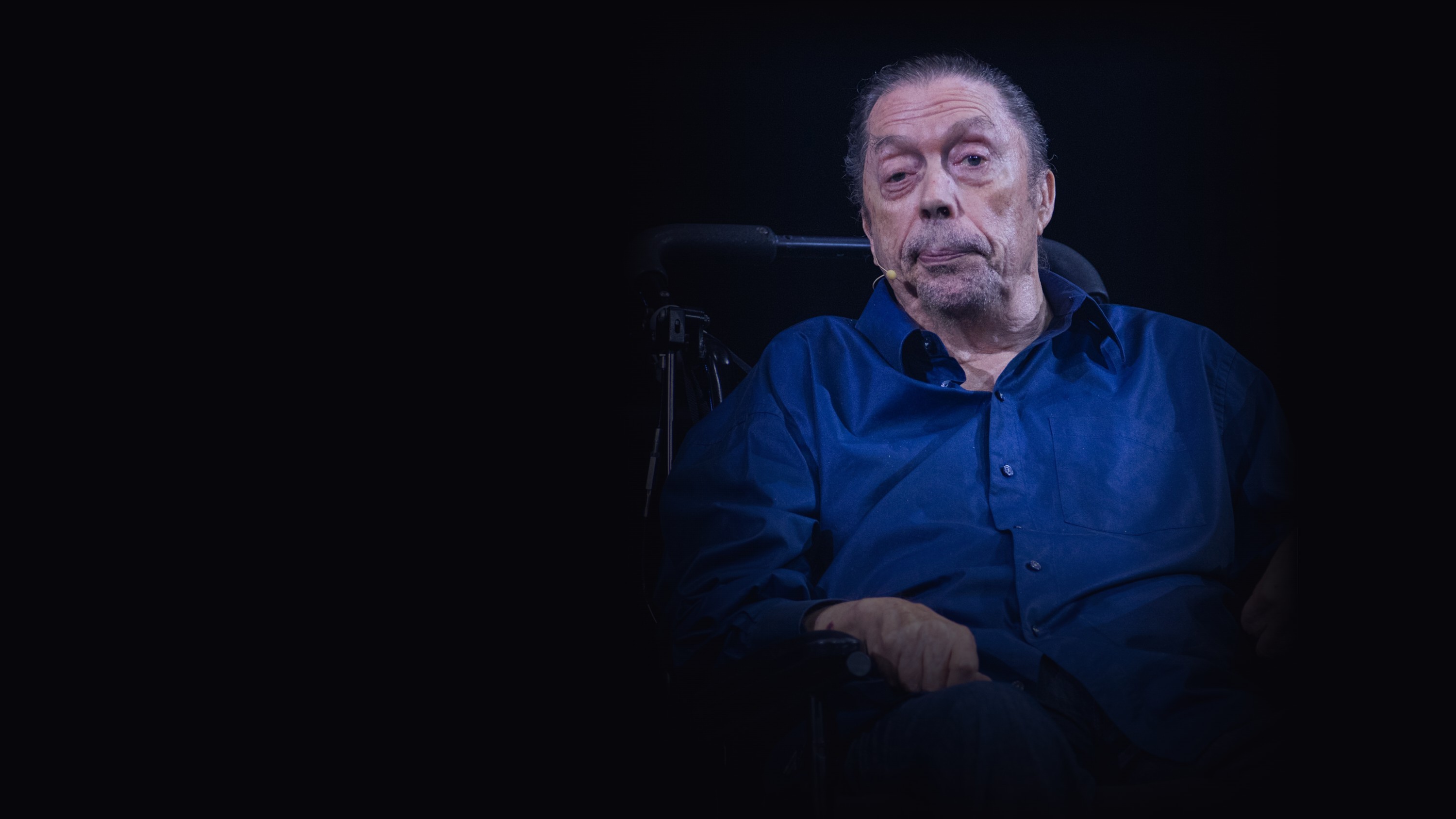
He had also sat for a fiftieth-anniversary question-and-answer session in Los Angeles on 26 September — the photograph at the top of this page is from that night. And on 4 October he made a rare public appearance at Hollywood Forever Cemetery for an anniversary screening of The Rocky Horror Picture Show, alongside Barry Bostwick. That was the last time most people saw him.
Harold’s Cross
There is a temptation, when a star of this size dies, for an Irish publication to find an Irish connection and lean on it. In this case there is not much of one to lean on. Tim Curry did not perform here so far as any record shows, had no Irish roots that he ever spoke about, and no Irish co-stars worth the name. At the time of writing there has been nothing from the President, from the Arts Council, or from any Irish theatre.
The connection is with the audience, and it is real. Writing in The Irish Times today, Donald Clarke put it exactly: decades after the film’s release, audiences were “still dressing up to shout back the dialogue at the Classic Cinema in Harold’s Cross, south Dublin”.
That is the whole legacy in one sentence, and it is a better memorial than a statement from an institution. A cinema in Dublin 6W, a Saturday night, a room full of people in fishnets shouting at a screen, for decades, at a film that flopped. Clarke’s verdict on him is the right one too: he “died as an irreplaceable original”.
In his own words
IN HIS OWN WORDS
On risk, on failure, and on the part he could not shake
“I heard a woman on a bus saying, do you have a house in town or a house in the country? And I thought, yes, he should sound like the queen.”
On finding the voice of Frank-N-Furter
“It died a death. It was a failure. And I was crushed… But I was tougher than that.”
On the film’s release in 1975
“He gave a lot of teenagers permission to be different, and I’m very happy that he did have that power.”
CBS Sunday Morning, October 2025
“I had to learn how to speak again. That was very weird. I hated not being able to speak.”
On the aftermath of the 2012 stroke
“I did think it was risky and indeed it was. But I like risky. I would choose risky over anything.”
The Guardian, October 2025
Quotations from interviews given between March and October 2025, to NPR, CBS Sunday Morning and The Guardian.
What they said
The tributes today divide neatly, and the division says something. Half are from people who worked with him and describe a colleague. Half are from people who never met him and describe permission.
Michael McKean, who was Mr Green in Clue, wrote the one that has been shared most, and the least comfortable.
“My last conversation with Tim Curry was about life and love and laughter. The grim physical state he found himself in has now ended, a blessing. Our blessing was that we had Tim Curry in our lives.”
Michael McKean
Eric Idle, who put him in a suit of armour and made him King Arthur, was characteristically economical.
Very sad to see the passing of Tim Curry, our first King Arthur. A fine man, singer, actor, host and gardener.
— Eric Idle (@EricIdle) August 26, 2026
Carol Burnett, who played Miss Hannigan to his Rooster in Annie: “Nobody could play lovable villains better than he could. He was a dear friend. I was blessed to know him.”
And the Muppets, for whom he was Long John Silver, posted the tribute that would probably have pleased him most.
“Few humans have earned the title of honorary Muppet more than the legendary Tim Curry,” it reads. “As a performer he was unparalleled — witty, charming, unnerving, and deeply funny. We will always consider it one of our greatest treasures to have been part of Long John Silver’s crew.”
Luke Evans, who is currently playing Frank-N-Furter on Broadway, wrote the tribute of somebody standing in a very long shadow: “He was a force, a bright fierce flame, an exquisite charm and that rich vocal tone. I hope, wherever you are, you’d approve of one more Frank having the time of his life in those heels.”
Linus O’Brien, son of Richard O’Brien, who wrote the part, gave a statement to Playbill. Richard O’Brien himself had not spoken publicly at the time of writing.
What he actually did
Tim Curry was never a film star and never really tried to be. He was something rarer and harder to sustain: a performer whose presence in a cast was, on its own, a reason to watch the thing. Fifty years of work and not one Tony, not one Oscar, not one BAFTA. One Emmy, for a cartoon.
What he has instead is a role that outlived the medium that carried it, and a very specific kind of afterlife. In 1973, in a room above a theatre in Chelsea, a 27-year-old vicar’s son from Cheshire walked out in a corset and heels and played it completely straight — not as a gag, not as a wink, but as somebody who had decided what he was and was daring the room to have a problem with it.
Fifty-three years later people are still queuing at midnight, in fishnets, in Harold’s Cross, to shout back at him.
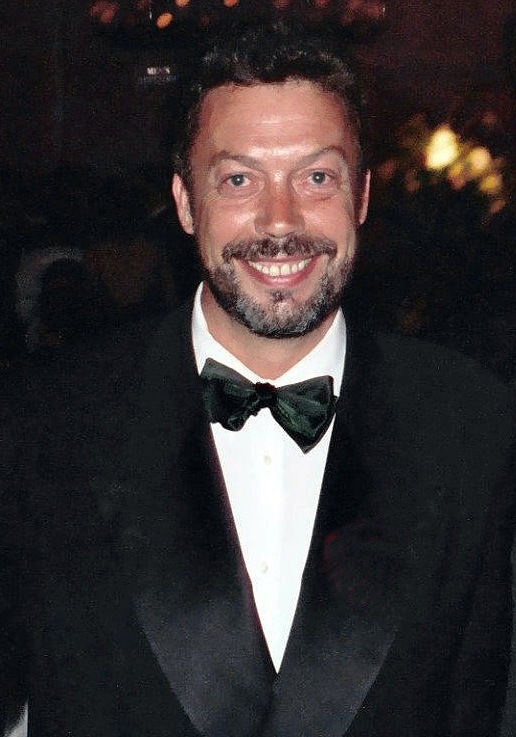
Sourcing note. Tim Curry’s death was confirmed by his longtime manager Marcia Hurwitz in a statement issued by his representative Sean Katz, first carried by USA Today and quoted here verbatim. The statement gives the date of death as 25 August 2026, which is the date we have used; some outlets printed 26 August, which is the date the news broke. The Los Angeles Fire Department and police response times are as reported by CNN. No cause of death has been given by the family or by any authority, and we have not speculated; his 2012 stroke is noted as biography, not as a cause. His death is reported by Variety, The Hollywood Reporter, NPR, CBS News, NBC News, CBC and The Irish Times, among others. Biographical detail — his parents, schooling, degree, the Hair audition and his meeting with Richard O’Brien — is drawn from those obituaries, from his own memoir Vagabond (Grand Central Publishing, 14 October 2025) and from contemporaneous theatre records. Stage dates and performance counts for The Rocky Horror Show, the Roxy run and the Belasco run are from theatre archives and contemporaneous reporting; Curry did not appear in the full London run. The film’s release, withdrawal, and 1 April 1976 reopening at the Waverly are as documented by the American Film Institute. Quotations from Curry are from interviews given to NPR (broadcast March 2025), CBS Sunday Morning (October 2025) and The Guardian (14 October 2025), and are quoted as those outlets carried them. His Tony nominations are for Amadeus (1981), My Favorite Year (1993) and Spamalot (2005); he won none of them, and his single competitive win is the 1991 Daytime Emmy for Peter Pan & the Pirates. Several outlets today have described him as a multiple Emmy, Grammy and Tony winner; that is wrong and we have said so. We have not printed a chart position for “I Do the Rock” because published figures conflict. The Irish material is from Donald Clarke in The Irish Times, 26 August 2026, quoted directly; we found no Irish performances, no Irish statements from any public body or theatre, and we have not manufactured a connection. Tributes are quoted from the individuals’ own posts or from statements given to named outlets, all dated 26 August 2026; where a post is public we have embedded it using the platform’s own embed code rather than reproducing any image. The photograph at the top of this piece was taken by Kevin Paul at a question-and-answer session for the fiftieth anniversary of The Rocky Horror Picture Show in Los Angeles on 26 September 2025, and is used under the Creative Commons Attribution 4.0 International licence; we have cropped it and extended its own black background to fit the shape of this page, which that licence permits. The 1995 portrait is by Alan Light, taken at the 47th Emmy Awards Governor’s Ball on 11 September 1995 and used under the Creative Commons Attribution 2.0 Generic licence; it was cropped by its uploader to remove other people from the frame. Licences and photographer credits for both were read directly from their Wikimedia Commons file pages. We have not reproduced any press or agency photograph. Richard O’Brien had not commented publicly at the time of writing. This piece was published within hours of the news and will be updated.
You Might Also Like
The latest from The Moiré Edit.