The Return of the Sleeper Train: Europe by Night
Fall asleep in one city and wake in another. The night train is genuinely back — but ten routes vanished from the 2026 timetable, and the story is more complicated than the romance suggests.
The sleeper train is having its moment, and the moment is more contested than the headlines allow. Yes, there is a new generation of night trains with lockable single pods, wireless charging and showers. Yes, European Sleeper launched a Paris–Berlin service in March. And yes, at the same time, ten overnight connections were removed from the 2026 timetable, several of them Nightjet routes, and one national parliament cancelled a service that had already started selling tickets.
So: the night train is back, and it is also fragile. Here is what actually runs in 2026, what it costs, what it is like, and how an Irish traveller gets on one.
What was lost
Start here, because it is the part the travel pages skip. The Paris–Vienna and Paris–Berlin Nightjets ended on 14 December 2025, after the French transport ministry withdrew funding. They were not failing for want of passengers: the two routes carried 66,000 people in 2024 at 70% average occupancy, and that was running only three days a week.
SNCF Voyageurs' explanation is worth quoting because it is the central economic problem of the whole sector. Night trains, they argued, face "a huge economic challenge", and "economic equilibrium would not be achievable even with higher ridership because of the high operating costs." The killer detail: a night-train berth can be sold once a day. An aircraft seat can be sold up to five times, a day-train seat up to four. Add staffing and multi-country track charges and the arithmetic is brutal.
Elsewhere: Switzerland's parliament cancelled the Basel–Copenhagen sleeper before its April 2026 launch, with presales already running. SJ withdrew from Stockholm/Berlin–Hamburg after 31 May when Swedish startup funding ended. Munich–La Spezia and Vienna–La Spezia went from the timetable. Trenitalia's Rome–Marseille Espresso Riviera is not running this summer at all.
A night-train berth can be sold once a day. An aircraft seat can be sold five times. That single fact explains most of what is happening.
What launched anyway
And yet. European Sleeper began running Paris–Brussels–Berlin on 26 March 2026, picking up almost exactly the route ÖBB had dropped — three nights a week, leaving Paris-Nord on Sundays, Tuesdays and Thursdays, returning from Berlin on Mondays, Wednesdays and Fridays. It goes via Brussels rather than Strasbourg and Frankfurt, adding Aulnoye-Aymeries, Mons and Liège-Guillemins. Combined with their Prague service that makes six Brussels–Berlin nights a week.
It is a scrappier operation than ÖBB's — rented 1990s German carriages, 12 to 14 coaches, no dining car at launch — and it was funded partly by a €1.3m cooperative share offering with shares from €280, which is to say partly by its own passengers. In June they added Amsterdam and Brussels to Milan, three times weekly, via Cologne, Bern and Brig.
Meanwhile Snälltåget pushed into Norway with seasonal Malmö–Oslo and Malmö–Trondheim services; RDC Deutschland rescued Berlin–Hamburg–Stockholm from summer 2026, though at around half the previous service days; Poland's PKP runs Berlin to Przemyśl and the Carpatia through Prague, Vienna and Salzburg; and the Caledonian Sleeper added a Birmingham stop to its Highland services.
The new trains, and the mini cabin
ÖBB's new-generation Nightjet stock, built by Siemens, entered service in December 2023. The order was cut from 33 trainsets to 24, with money moved to daytime services — all in service by mid-2026. Zürich–Hamburg switched to the new stock in December 2025, Vienna–Zurich in June 2026, with Amsterdam–Zurich due in December.
The genuinely new idea is the mini cabin: a fully enclosed, lockable single sleeping pod, roughly 190 by 63.5 by 90 centimetres, with a flat bed, a reading lamp, a control panel for lights and attendant call, a folding table, a mirror, a luggage shelf, a 230V socket, USB and a wireless charging pad. It solves the oldest problem with night trains — that a solo traveller had to choose between sharing a couchette with strangers or paying for a whole compartment.
Above it sit conventional couchettes and private sleepers, with en-suite toilet and shower in the deluxe rooms.
What it costs
On Nightjet, seats start around €29.90. A mini cabin on a long run like Vienna–Hamburg is roughly €101 booked three months out, or about €140 a fortnight out — which tells you everything about when to book. Private sleepers cost more but become competitive per person shared between two.
On European Sleeper's Paris–Berlin, per person: a seat from €49; a five-berth couchette from €79–€99; a couchette used as a sleeper €119–€289; the sleeping car €139–€339.
The rule with all of them is the same: book early. Sleeper inventory is small and prices climb steeply as departure approaches.
Is it actually nicer?
Honestly, sometimes. The case for is real: you leave a city centre in the evening and arrive in another city centre at breakfast, having lost no daylight and paid for no hotel. There is no airport, no security queue, no transfer at either end. And the emissions are a fraction of the equivalent flight.
The case against is equally real. You will sleep less well than at home; couchettes are shared unless you pay up; showers exist only in the better sleepers; luggage space is limited; and the older rolling stock — which is still most of it — is comfortable rather than luxurious. If you need to be sharp for a meeting at nine, take the plane.
Where it genuinely wins is on the routes where flying is a nuisance anyway, and where the journey is part of the holiday rather than an obstacle to it.
Getting on one from Ireland
This is the awkward bit: there is no direct rail connection from Ireland to the European network, and no realistic ferry-and-train chain that beats flying for time. In practice you fly to a hub — Paris, Brussels, Amsterdam, Vienna, Zürich — and start there.
The neat itineraries are the ones that use the sleeper as a leg rather than a novelty: fly into Brussels, take the night train to Berlin or Prague, come home from the other end. Or fly to Vienna and let the Nightjet network do the rest of central Europe for you.
The verdict
Book it while it exists. The new trains are a real improvement and the mini cabin is the best thing to happen to solo rail travel in decades — but this is a sector that lives on public subsidy, and 2026 has shown how quickly a route disappears when a transport ministry changes its mind. If there is a night train you have been meaning to take, take it this year.
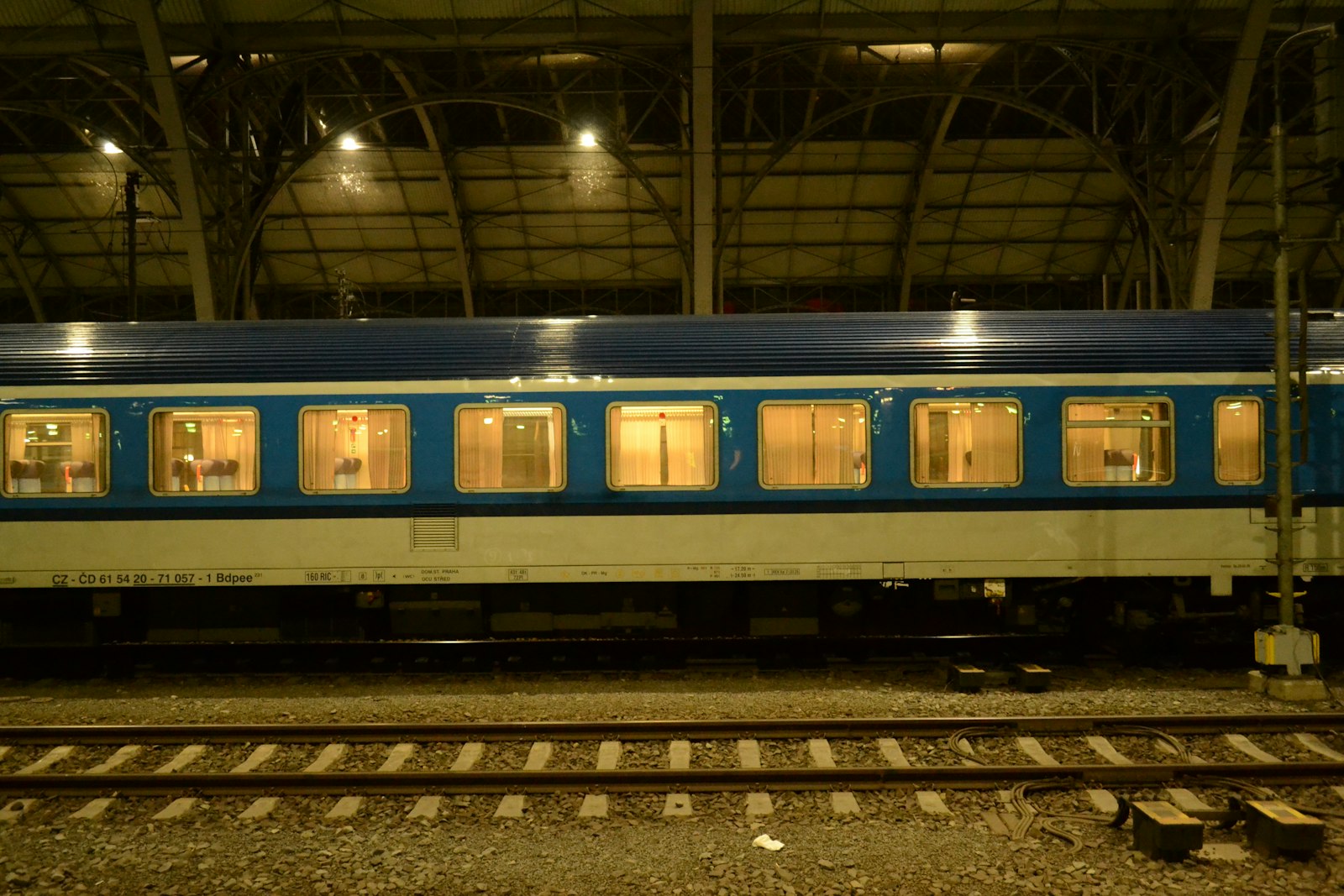
Photograph by viktor rejent on Unsplash.
You Might Also Like
The latest from The Moiré Edit.