Sardinia: The Italian Island the In-Crowd Chooses Over Sicily
Costa Smeralda glamour, Bronze Age towers and water the colour of a jewellery advert — plus the beach booking rules that will ruin your holiday if you ignore them.
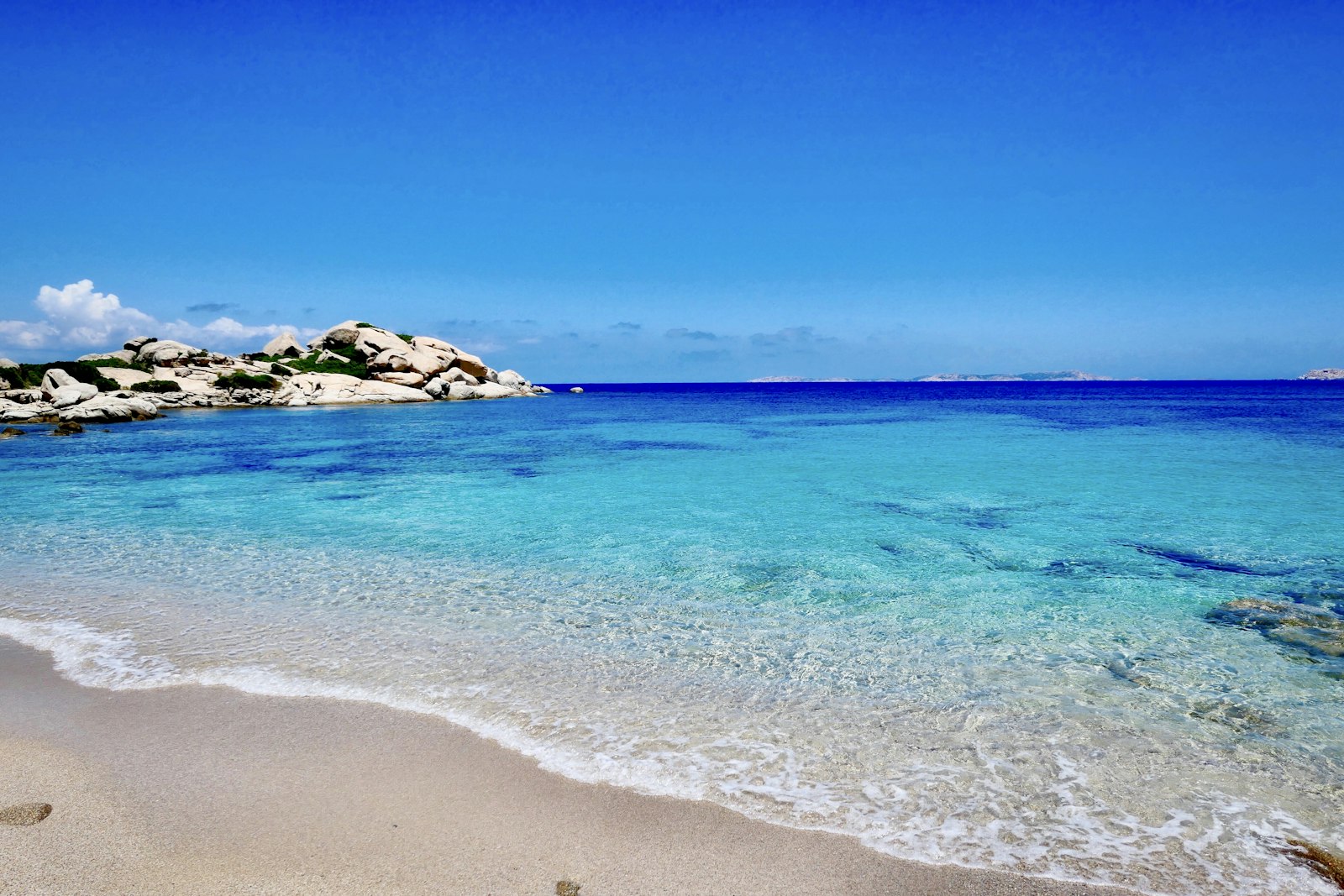
Sardinia is the Mediterranean island that people who have done Sicily move on to, and the comparison flatters neither. Sicily is layered, chaotic and historically overwhelming. Sardinia is older, emptier and stranger — a place with a Bronze Age civilisation nobody can fully explain, a language that is not Italian, and water that genuinely does look like the retouched version.
It is also, in 2026, an island that has started saying no. Nine of its most famous beaches now cap daily numbers, several charge to set foot on the sand, and one has been closed to visitors since 1994. Turn up without reading the rules and you will spend your holiday at a locked gate. Here is how to do it properly.
The glamour, and where it came from
The Costa Smeralda is not an old resort coast — it is a project. On 14 March 1962, six men including the young Aga Khan, Patrick Guinness and John Duncan Miller formed a consortium in Olbia and bought 1,800 hectares of empty north-eastern shoreline at Liscia di Vacca, Porto Cervo, Cala di Volpe and Capriccioli. They appointed an architecture committee — Luigi Vietti, Jacques Couëlle, Michele Busiri Vici, Antonio Simon Mossa — and imposed rules on materials and colour drawn from Sardinian and Mediterranean vernacular, so that what got built would look like it belonged.
Porto Cervo, designed by Vietti and finished in 1964, became the centre of it, and the roughly fifty kilometres of coast around it became the Emerald Coast. The Aga Khan died in February 2025, which closed a chapter; the consortium and its architectural controls continue.
What this means for a visitor is that the Costa Smeralda is expensive, beautiful and slightly unreal — a place to have one very good dinner and look at the boats, rather than a base for a fortnight.
The beach rules, and why they matter
This is the practical heart of any 2026 Sardinia trip. Nine beaches now operate caps, fees or both, and the enforcement is real.
La Pelosa at Stintino — the shallow, blindingly pale one everyone photographs — takes 1,500 people a day at €3.50 each, booked in advance. Five hundred places open early; up to a thousand more release at 09:00 two days before. Maximum four people per booking; under-twelves are free and uncounted. Parking is separate. Book only through the official site — resale is prohibited.
And then there is the rule that catches everyone: your towel may not touch the sand. You must put a mat underneath it, microfibre included, because the sand leaves the beach in the fibres. Fines for breaching beach-protection rules run €25 to €500, and taking sand or shells home carries a regional penalty of €500 to €3,000. People have been stopped at the airport.
Cala Goloritzé in Baunei allows 250 people at a time at €7, booked three days ahead. The walk in starts at Su Porteddu, climbs to 490 metres and drops to the sea — about an hour down and two hours back, which is the correct order to learn it in. Descent is permitted 07:30 to 15:00, and you can stay until around five. It is a designated Natural Monument, not a UNESCO site, whatever you may read.
Cala Mariolu takes 700 a day for a nominal fee plus levy, reached by boat or a hard trail. Cala Coticcio on Caprera allows just sixty, with a mandatory guide.
And Spiaggia Rosa on Budelli — the pink beach — has been closed to visitors since 1994. You cannot walk on it. Boat trips pass close enough to see it, and that is the whole of the experience now.
Nine beaches now cap numbers, several charge to set foot on the sand, and one has been shut since 1994. Read the rules before you book the flight.
The Maddalena archipelago
Seven main islands — La Maddalena, Caprera, Budelli, Santa Maria, Spargi, Santo Stefano and Razzoli — of which only the first two are inhabited; the rest are protected from building entirely. Ferries run from Palau, about twenty minutes across.
Caprera is where Giuseppe Garibaldi retired in 1870 and where he died; his house is a museum and there is a memorial at the old Arbuticci fort. Boat day trips around the outer islands are the best way to see the water at its most absurd, and they sell out — book before you arrive.
The Bronze Age, and a brand-new UNESCO listing
Sardinia's strangest asset is the Nuragic civilisation, which built thousands of stone towers across the island and left almost no explanation. Su Nuraxi di Barumini, listed by UNESCO in 1997, is the one to visit: a central basalt tower with three chambers raised between the seventeenth and thirteenth centuries BC, four more towers and a curtain wall added in the Late Bronze Age, and a seven-lobed outer wall in the Iron Age. Around it stood a village of anywhere from forty to two hundred huts, with workshops, meeting halls, paved streets and a sewer system by the ninth century BC. Giovanni Lilliu excavated it between 1950 and 1957.
Check opening hours and ticket prices directly with the Barumini foundation before you drive out — they are not reliably published elsewhere, and visits have historically been guided.
The news, though, is newer. On 13 July 2025 UNESCO inscribed the domus de janas — the “fairy houses” — as Italy's 61st World Heritage site. They are rock-cut tombs, the earliest from the fifth millennium BC, used right through to the Nuragic period, and they constitute the most extensive underground funerary architecture in the western Mediterranean. The listing is a serial one across central-northern Sardinia, led by Alghero with a network of municipalities behind it. It is the best reason to give the interior a couple of days.
The interior, which most people skip
Inland Sardinia is a different island: mountains, shepherds, and a culture that spent three thousand years being invaded from the coast and responded by moving uphill.
Orgosolo is covered in murals — the first painted in 1969 by an anarchist theatre troupe from Milan, then taken up by a local teacher, Francesco Del Casino, and his students, until the village became a running political argument in paint. Gola Su Gorropu, the gorge in the Supramonte, has walls that run to hundreds of metres and is one of the great walks in southern Europe.
Eat and drink
Culurgiones — pleated parcels of potato, mint and pecorino, which look like a stitched seam and taste better than any of the components suggest. Porceddu, suckling pig cooked slowly over myrtle. Pane carasau, the paper-thin shepherd's bread that keeps for months. Cannonau, the big red, and Vermentino di Gallura, the white that is worth seeking out by name.
You will read that Sardinia is a Blue Zone and that Cannonau is why people live to a hundred here. The longevity clustering in Ogliastra and Barbagia is real and well documented; the causal story about the wine is marketing. Drink it because it is good.
When to go
June and September. July is hot and busy; August is the whole of Italy on holiday at once, and the beach booking systems that merely inconvenience you in June become genuinely punishing. May and October are quiet and lovely, though some coastal businesses shut.
There are no direct flights from Ireland worth planning around; you connect through an Italian hub to Olbia for the north-east, Cagliari for the south, or Alghero for the north-west. Hire a car — the island is far bigger than it looks and public transport between the coasts is not a serious proposition.
The verdict
Come for the water, stay for the bit nobody photographs — a gorge, a tower nobody can explain, a village arguing with itself in paint. Book your beaches before you book your restaurants, put a mat under your towel, and give the interior at least two days. Sardinia is not Sicily's understudy. It is a stranger and older place, and it is finally being protected like one.
Photograph: Valle dell'Erica by Massimo Virgilio on Unsplash.
You Might Also Like
The latest from The Moiré Edit.