San Sebastián: The Case for Eating Your Way Across the Basque Country
Three restaurants with three stars each, a bar that serves exactly two tortillas a day, and a beach shaped like a shell. How to eat your way across the Basque Country.
There is a reasonable argument that San Sebastián — Donostia, if you are speaking Basque, and you should at least try — is the best place to eat on earth. Not the most various, not the most fashionable, but the highest concentration of serious cooking per head anywhere: three restaurants holding three Michelin stars within a short drive of one another, a fistful of one- and two-stars, and beneath all of it a bar culture so good that the starred rooms are arguably not even the point.
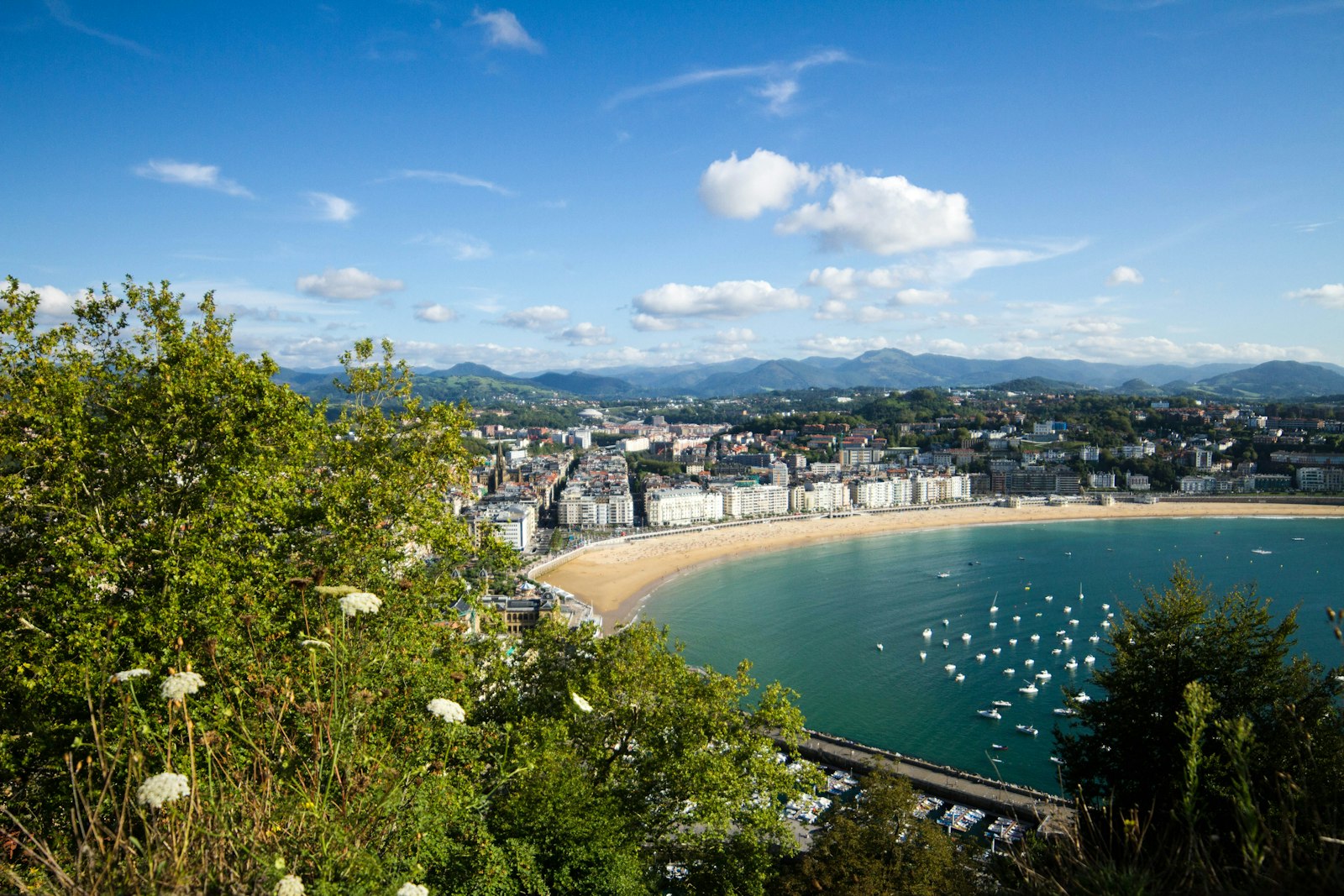
The city sits on a shell-shaped bay in the corner of the Bay of Biscay, an hour from the French border and about the same from Bilbao. It rains. Bring a coat and an appetite.
How pintxos actually work
Get this right and everything else follows. Pintxos are not tapas. Tapas, in much of Spain, is something that arrives free with a drink. Pintxos are small dishes you pay for — as a local chef put it, "we pay for the pintxos because they are a small dish." Confusing the two is the fastest way to mark yourself out.
They are laid along the counter and you help yourself, but the better bars cook to order from a blackboard, and that is where the good stuff is. Payment is on trust: you keep the cocktail sticks, and the barman counts them when you leave.
The rhythm is one pintxo and one small drink per bar, then move. Three to five bars over ninety minutes is a proper crawl and runs €40–€60 a head; individual pintxos are typically €4–€10. If you want it cheaper, look for pintxo-pote — a pintxo and a drink for €2.50 in Amara Viejo or €3.50 in Gros, on set evenings in a two- or three-hour window. Ask locally which night; it is traditionally Thursday in Gros.
The bars, and the tortilla you have to apply for
Bar Néstor in the Parte Vieja makes exactly two tortillas a day — one at one o'clock, one at eight — and you put your name on a list beforehand to get a wedge. Come for that, stay for the txuleta and a plate of tomato salad that has no business being as good as it is.
La Cuchara de San Telmo does nothing from the counter: everything is cooked to order, and the braised veal cheek — carrillera — is the single dish most people remember from a trip here. Borda Berri is for the kebab de costilla.
Drink txakoli with all of it — the sharp, faintly fizzy Basque white, poured from a height to aerate it, served properly cold at six to ten degrees. The Getariako Txakolina DO was created in 1989 and extended across Gipuzkoa in 2007; there are 479 hectares of it, almost all within sight of the sea, made mostly from Hondarrabi Zuri.
Bar Néstor makes two tortillas a day — one at one o'clock, one at eight. You put your name down beforehand.
The stars, and what they cost
Arzak has held three stars since 1989, now cooked by Juan Mari and his daughter Elena. Akelarre, Pedro Subijana's room up on Monte Igueldo, has three and one of the great dining-room views in Europe. Martín Berasategui at Lasarte-Oria, seven kilometres out, has three. Azurmendi over in Bizkaia makes four within an hour's drive.
Below them, Mugaritz at Errenteria has held two stars since 2006 and is the most divisive restaurant in Spain — Andoni Aduriz treats a meal as an argument. Two things to know: it opens seasonally, 1 May to 25 October, and it releases its entire year of bookings on 1 January, after which three months of them go in about two days.
Amelia holds two on La Concha. One-stars include Kokotxa in the old town, Elkano at Getaria and Etxebarri at Axpe.
Tasting menus at this level run roughly €275–€340 — Arzak and Berasategui around €295, Akelarre €290–€340, Mugaritz about €275 for some thirty courses, Amelia around €220. Confirm when you book; none of them publish prices openly. Three-stars want 60 to 120 days' notice.
Cider houses, and the shout
If you can come between mid-January and the start of May, do. Txotx season ran 13 January to 1 May in 2026, across roughly 70 cider houses in 24 towns, concentrated in Astigarraga, Hernani, Usurbil and Urnieta.
The format is fixed and wonderful. Someone shouts “Txotx!”, everyone gets up, and you queue at the barrel to catch a thin jet of cider in a wide glass held low. You drink it immediately and go back to the table. The menu barely varies: cod omelette, cod with peppers, a great txuleta over coals, then Idiazabal cheese with quince and walnuts. Cider is unlimited. Book through the cider-house finder and ring for the price, which nobody publishes.
Beaches, and when the surf works
La Concha is the famous one — a near-perfect crescent, sheltered, shallow and good for swimming rather than surfing. Ondarreta sits at its western end below Monte Igueldo. Zurriola, on the other side of the river in Gros, is the surf beach.
The surf calendar is the opposite of the tourist one. Winter, November to March, is the real season — surfable perhaps 60 to 80% of days, but you need a 4/3 wetsuit with boots and hood. Autumn is the sweet spot: strong north-westerly Atlantic swells and a 4/3 is enough. Summer is poor, surfable maybe a fifth of the time. Intermediates should look at Zarautz along the coast, which is more consistent.
Two days in the diary
20 January — the Tamborrada. At midnight the flag goes up in the Plaza de la Constitución to the March of San Sebastián, led by the Gaztelubide society, and the entire city drums for twenty-four hours until it comes down again at midnight. The ceremony in its formal shape dates from 1935; women were admitted in 2006 and first directed it in 2012. It is one of the great civic spectacles in Europe and almost unknown outside Spain.
Semana Grande — Aste Nagusia — ran 8–15 August in 2026, opening with a cannon shot from Alderdi Eder and centred on an international fireworks contest fired over La Concha every night. It always brackets 15 August.
Bilbao, Getaria and the rest
Bilbao is an hour away and the Guggenheim is €18, or €9 for students, over-65s and pensioners, free under 18, audio guide included. Open Tuesday to Sunday, 10:00 to 19:00, later in summer. The neat trick: half price on the final day of each exhibition, between four and seven.
Getaria, twenty-five minutes west, is a fishing village with two claims: Elkano, where whole turbot is grilled over coals in the way that has been copied all over the world, and the Balenciaga museum — Cristóbal was born here. Do both in one day.
Getting there, and when
There are no useful direct flights from Ireland; connect through Madrid or Barcelona to Bilbao or San Sebastián, or fly to Biarritz and drive down in under an hour. May, June and September are the best months. August brings Semana Grande and the whole of Spain; January brings the Tamborrada and the cider houses, which is a genuinely underrated way to see the place.
The verdict
Book one starred restaurant if you want to, but do not build the trip on it. The real San Sebastián is four bars in the Parte Vieja on a wet Tuesday, a glass of txakoli poured from shoulder height, and a pile of cocktail sticks you are quietly proud of.
Photograph: La Concha by Andrea Huls Pareja on Unsplash.
You Might Also Like
The latest from The Moiré Edit.