Ireland Fashion Week 2026: Year Two, and the First Without Paul Costelloe
Seventy-five designer slots, eight shows and up to 80% of production costs covered. Ireland Fashion Week's second edition runs 7–12 October — with no venue, line-up or ticket yet announced.
The inaugural Ireland Fashion Week drew seven shows, fifty-five designers and more than two thousand attendees. It also, according to the Irish Post, concluded with Paul Costelloe's final show at Dublin City Hall. Costelloe died in November 2025, aged 80.
The second edition therefore carries something the first did not. It also carries a heavier claim: that a fashion week can fix the one thing Irish fashion has never solved, which is money.
From Ireland Fashion Week's own Instagram: the Irish Roots Show at Slane Castle, one of the seven shows in the inaugural October 2025 edition.
What Ireland Fashion Week Actually Is
Ireland Fashion Week launched in October 2025 as, in its own words, "Ireland's inaugural fashion week." The organisers pitch it as a nationwide project rather than a Dublin one — the site calls it "a nationwide movement" spanning "cities and communities nationwide." The claim holds up better than most such claims do: the inaugural edition's identifiable programming ran well outside Dublin, with the Irish Roots Show staged at Slane Castle in Co. Meath and Aoife McNamara's Modern Heritage show at Ballynahinch Castle in Connemara, alongside Dublin venues.
The founding premise is stated plainly: Irish designers "had the vision, but not the visibility." The organisation lists four pillars — Inclusivity by Design, Reflecting Irish Identity, Sustainability Efforts and Driving Future Growth — and frames itself as prioritising "emerging Irish designers, not just established names."
One practical note. The event's website is irelandfw.com, not the more obvious irelandfashionweek.ie or .com. Contact is hello@irelandfw.com; the Instagram handle is @irelandfashionweek.
Who Founded It, and Who Runs It
The founder is Ashley McDonnell, Galway-born, previously at LVMH, Dior, Google and Puig. The organisation's own about page describes her as "a powerhouse in global luxury and tech, and a lifelong champion of Irish talent." She is the only person the site identifies by name in an executive capacity.
Below her, the structure is described but not staffed in public. The site refers to "a passionate, multidisciplinary team" drawn "from across fashion, business, technology, media, and cultural production." No individual team member is named anywhere.
There is an advisory board, and here the record is slightly better. The site says its members are drawn from fashion and retail, media and publishing, show production, sustainability and D&I, and beauty, technology and entertainment — and that they "contribute voluntarily." That is a meaningful disclosure: an unpaid advisory body, not a remunerated board of directors.
Two advisory board members were named publicly in a post dated 11 June 2025:
- Chupi Sweetman, CEO and founder of the Irish fine jewellery brand Chupi.
- Aimee Hazeldine, fashion buyer and lecturer, and Programme Chair for the MSc in Fashion Buying and Management at TU Dublin, who also runs an independent consultancy.
The organisation also published the names of four judges for the inaugural edition, all on the same date:
- Stephen Healy, a creative and talent management professional whose two-decade career includes work with Zara, Mango and Amazon Fashion, and editorial for Vogue and L'Officiel.
- Ann-Marie Deady, founder of the Waterford design studio AM Deady Design and a long-term collaborator with the designer Helen Steele.
- Rachelle Cunningham, an artist and illustrator who has worked with Chanel, Vivienne Westwood, Lanvin, Nina Ricci and Roberto Coin.
- Mandy Maher, founder of Catwalk Modelling Agency and The Platform by MM Talent Agency, Best Stylist at the VIP Awards 2025, and head judge at the Galway Races.
Note what these people are and are not: the judges select designers. Nothing on the record suggests they hold governance roles.
Ireland will be firmly on the fashion map, where it belongs! — Mandy Maher, judge, Ireland Fashion Week
From Ashley McDonnell's own Instagram, where she tells the story of how she came to found Ireland Fashion Week.
How It Is Structured and Funded
Ireland Fashion Week publishes no legal entity name, company registration number or registered office anywhere on its website. Its terms of use and privacy policy — the two documents that would normally carry that information — name no corporate entity at all. The privacy policy contains a line reading "PLEASE READ THIS STATEMENT CAREFULLY TO UNDERSTAND HOW CHARITY COLLECTS, USES AND STORES YOUR PERSONAL DATA." That reads as unedited template boilerplate rather than a declaration of charitable status, and we are not treating it as evidence of either.
What is visible is the funding model, and it is unusual: Ireland Fashion Week does not charge designers to show. It pays for them.
For the inaugural edition, the organisers stated that selected designers would receive subsidised production costs of up to 90 per cent, with guidance on securing the remaining 10 per cent through Local Enterprise Office grants — routing designers toward existing Irish state small-business supports rather than replacing them. Designers were also offered partner technology packages the organisers valued at over €250,000, naming Tailr (AI sizing and supply chain), Heuritech (trend forecasting) and ChatLabs (content tools).
For 2026 the stated subsidy is up to 80 per cent, for "experienced designers." The two figures may not describe the same thing — one is a launch offer, the other a second-year programme with more slots to fill. Either way, the per-designer subsidy is down while the number of designers is up.
The rest of the money is commercial. The inaugural edition ran as "Ireland Fashion Week powered by VISA", with Visa as headline sponsor, alongside a long tail of category partners: L'Oréal (hair), Medik8 (skincare), SOSU Cosmetics (beauty), Dripping Gold (tanning), DS Automobiles (vehicle), Oatly (beverage), The Dean Hotel Group (hospitality), Kildare Village (shopping destination), Meaghers Pharmacy (wellness), Alta Verde (holistic) and Circulate (creative agency). Supporting partners listed include Primark, Marks & Spencer, Specsavers, Avoca and the law firm Taylor Wessing.
That is a sponsor sheet built on beauty, retail and hospitality rather than luxury fashion — the honest shape of the Irish market, and a reasonable thing to build on. It is also a list with no visible state agency on it.
The organisers describe three things designers get: knowledge, connections and capital. Irish fashion has never been short of the first two. It is the third that has sent every generation of Irish designers to London, Paris or New York, and the only one a fashion week can plausibly change.
Ireland Fashion Week announcing Visa Ireland as its title sponsor, posted jointly to the event's and Visa Ireland's own Instagram accounts.
The 2026 Edition: Dates, Venues, Schedule
The second edition runs 7–12 October 2026 in Dublin — six days, up from the inaugural five (6–10 October 2025).
Venues are described only as "heritage locations." None has been announced for 2026. The only venue named anywhere on the event's own website is Anantara The Marker Dublin; we could not establish which 2025 show, if any, was held there.
The programme expands from seven shows to eight shows and showcases:
- Three flagship shows in heritage locations.
- Two spotlight shows linking Irish sport and fashion — an unusual pairing, and a shrewd one in a country where the two audiences barely overlap.
- One independent and emerging designers show.
- A Graduate Show, free to enter.
- IRISH EDIT, a new interactive showroom for accessories and alternative fashion categories.
IRISH EDIT is the structurally interesting addition, reflecting the other change for 2026: the programme now includes accessories brands, which the inaugural show categories did not accommodate.
The inaugural 2025 programme ran as seven named shows — Streetwear, Contemporary, Modern Heritage, Irish Heritage, Sportswear, Irish Roots and the Irish Sea Graduate Show — plus an After Party on 11 October. Irish Roots brought "heritage houses, family-run labels, and bold emerging talent" onto a shared runway. Irish Heritage, from 4.30pm on 10 October, was the Costelloe closing show.
The 2026 timeline, as published: applications closed 16 February 2026; selections were notified by 1 March 2026; the shows run 7–12 October.
Who Is Showing
For 2026, we do not know. A confirmed line-up exists — designers were notified by 1 March — but it has not been published anywhere we can find. The programme has expanded from 55 to 75 designer slots, and eligibility covers designers based in Ireland as well as Irish designers working internationally — a distinction that matters in a country whose best-known names mostly work abroad.
The inaugural line-up, which is published, gives a sense of the register. Named designers and brands were Rashhiiid (founded by Rachel Maguire, in the Streetwear Show), Sasha Donnellan (Contemporary Show), Aoife McNamara (Modern Heritage Show), Paul Costelloe (Irish Heritage Show) and Bold Golf (Sportswear Show). The Irish Roots Show carried nine mixed designers, and the Irish Sea Graduate Show brought together 40 graduates and students from Irish design institutions.
That is one internationally recognised name, a few established independents and a very large graduate cohort — a plausible shape for a first edition. Whether the extra twenty slots go to more graduates or to more names is the most useful thing the organisers could announce next.
From Ireland Fashion Week's own Instagram: a look from Aoife McNamara's ‘What The World Wears’ show at Ballynahinch Castle.
The Awards
The inaugural edition included an Ireland Fashion Week Awards. Confirmed detail is thin: the Lifetime Achievement Award went to Paul Costelloe, accepted by his son William Costelloe, creative director of the house, in his father's honour.
There is no published list of categories, winners, host or venue for the 2025 awards, and no 2026 awards programme has been announced. Given the organisation named four judges publicly in June 2025, the silence on the awards is odd.
Tickets and Access
There is no ticketing information in the public record we could reach: no prices, no on-sale date and no policy distinguishing trade from public attendance.
What access we can document is on the designer side, not the audience side. The Graduate Show is free to enter, and the programme includes Brand Bootcamps covering business, e-commerce, sustainability, legal, retail, buying, merchandising and styling. Both lower the barrier to entry, and both are aimed at people showing rather than people watching. The inaugural edition reported more than two thousand attendees across seven shows; we could not verify how that figure was compiled, or what share was trade, press or paying public.
What It Is Up Against
The comparison that matters is not with the size of the established fashion weeks but with their economics. At the international shows, showing is something a designer buys: production, venue, casting, styling and press are the designer's cost, and the schedule is in effect a market emerging labels must fund their way into. That is precisely the mechanism that has exported Irish talent for decades. The designers are not missing; the capital to stage them is.
Ireland Fashion Week has inverted that. It subsidises up to 80 per cent of production for selected designers, points them at Local Enterprise Office grants for the remainder, hands them a technology package and runs business bootcamps around the shows. Whatever else it is, it is not a rental schedule. McDonnell's public framing puts the funding first, which is unusual and correct:
I'm incredibly excited for year two of Ireland Fashion Week. Beyond the week of shows themselves, Ireland Fashion Week provides funding as well as crucial learnings, connections and financing… — Ashley McDonnell, founder, Ireland Fashion Week
The risk in that model is the mirror image of its virtue. A pay-to-show schedule is self-financing and survives an indifferent year. A subsidise-to-show schedule is only as durable as its sponsorship — and this one's is concentrated in beauty, retail and hospitality, categories that cut experiential marketing first. Seventy-five subsidised slots is a bigger commitment than fifty-five, funded from a sponsor base whose 2026 composition has not been published.
The other constraint is the calendar. Early October places Ireland Fashion Week after the main international season rather than inside it, making it a domestic and diaspora event by design. That is not a criticism: it is what allows the event to be about capital for Irish designers rather than about buyers who were never going to come.
The Absence in the Room
Paul Costelloe founded Paul Costelloe Collections in 1979, after training at the Grafton Academy of Fashion Design and working in Milan, Paris, New York and London. He was, per his public record, personal designer to Diana, Princess of Wales, from 1983 until her death in 1997, and showed at London Fashion Week from 1984. His clothes sold through Dunnes Stores from the 2000s; he appeared on Irish postage stamps in 2010 and judged RTÉ's Craft Master in 2013.
He closed the inaugural Ireland Fashion Week, and it was his last show. His son William presented his debut collection as creative director this season.
A second edition is where a new event either proves itself or quietly becomes a one-off. This one has more slots, more days and a reason to matter. What it does not have, seven weeks out, is a published line-up, a venue or a ticket.
From the Paul Costelloe label's own Instagram, posted on the night of its Autumn/Winter 2025 show at City Hall, Dublin, 10 October 2025.
What We Could Not Verify
This section is longer than we would like, and that is the story.
The organisation's legal identity. We could not establish what legal entity operates Ireland Fashion Week, whether it is a company or a not-for-profit, who its registered directors are, or where it is registered. The site names no entity, and the company-registry searches we ran turned up nothing we could stand over. We have named no directors because we found none. McDonnell is documented as founder; that is not the same as a directorship, and we are not asserting one.
Anyone beyond McDonnell in an executive role. The site references a multidisciplinary team and never names a member of it. Chupi Sweetman and Aimee Hazeldine were named by the organisation itself as advisory board members; we do not know the board's full membership, its size, or whether it changed for 2026.
Almost everything about the 2026 edition beyond the announced structure. No venue, no confirmed designer, no schedule with times, no ticket price, no on-sale date, no 2026 sponsor list, no awards programme. The slot count, show structure, subsidy rate and application deadlines above come from the organisers' own announcements, and we could not re-verify them against a second source. The dates are the exception: the event's own Instagram bio reads "Powered by @visaireland | 7-12 Oct 2026", which corroborates them independently.
Press coverage. We could not review every Irish outlet's 2026 archive. There may be substantial coverage we did not see.
The €7 million figure. One number circulating in connection with Ireland Fashion Week — €7 million in industry funding — comes from a single unattributed source. We are not repeating it as fact until the organisers confirm it, and nothing we retrieved this week confirms it.
Attendance. The "more than two thousand attendees" figure for 2025 is the organisers'. We could not find an independent count or a breakdown.
Paul Costelloe's date of death. Sources differ. Our earlier reporting gave 22 November 2025; his public encyclopedic record gives 21 November 2025. Both agree he was 80. We have not resolved the one-day discrepancy and have written around it rather than pick one.
The Anantara The Marker Dublin venue. It is the only venue named anywhere on Ireland Fashion Week's own website — Slane Castle and Ballynahinch Castle surface only in the organisation's Instagram captions — so we cannot say which show it hosted. It has not been announced for 2026.
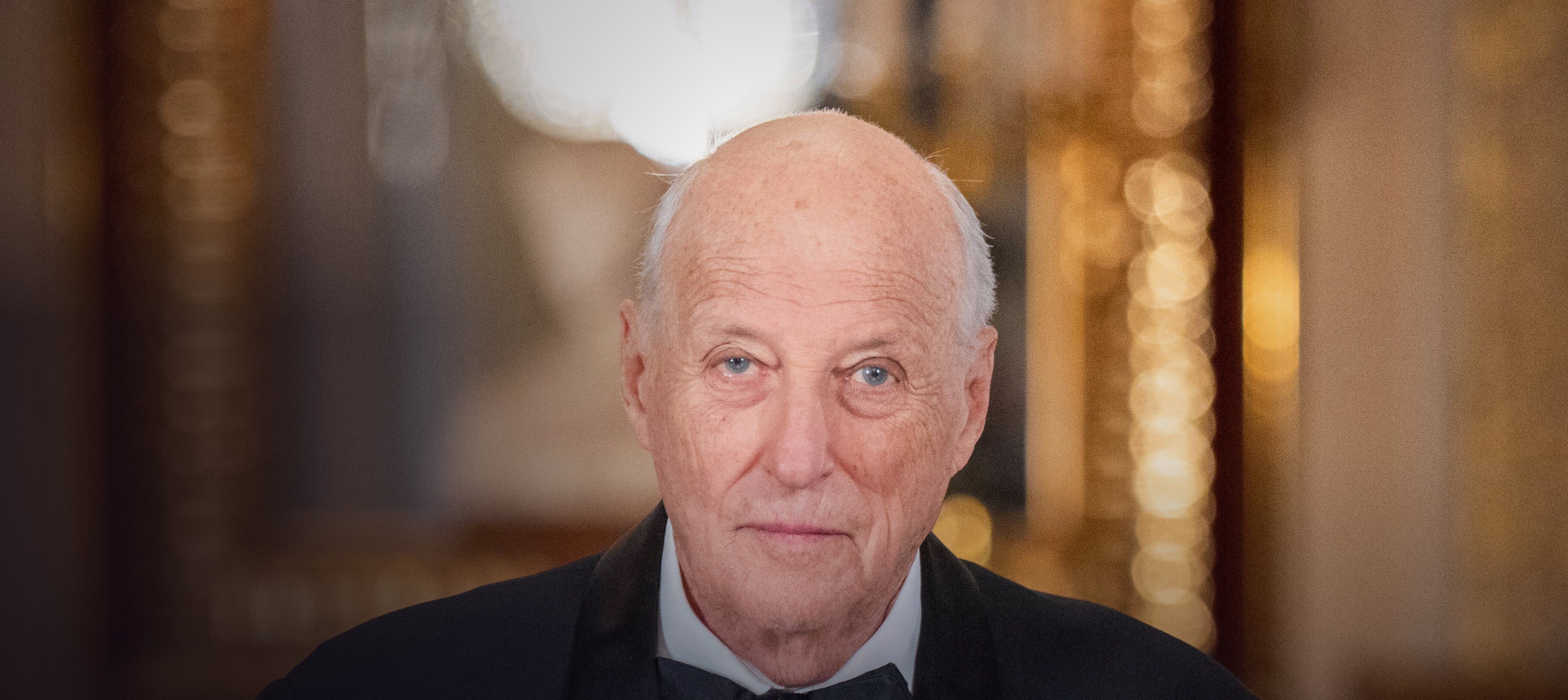
Hero photograph: Paul Costelloe, by Costelloe1979, licensed under CC BY-SA 4.0 via Wikimedia Commons.
You Might Also Like
The latest from The Moiré Edit.