Gucci Autumn/Winter 2026: Demna Takes the Floor
Plaster gods, a Botticelli gown and Kate Moss in diamonds — Demna's first Gucci runway asked to be felt rather than decoded.
There is a particular pressure that comes with following a designer everyone adored. Demna took the Gucci job knowing it, and for two collections he refused to play the game at all — a lookbook here, a Spike Jonze film there, nothing you could stand in a room and judge. On 27 February 2026, at the Palazzo delle Scintille in Milan, he finally let people sit down and look.
Getting the Count Right
Nearly every headline called this Demna's Gucci debut. It wasn't, quite. His first outing, La Famiglia for Spring/Summer 2026, arrived in September 2025 as a lookbook and a film rather than a show. A Pre-Fall 2026 lookbook followed in December, photographed by Demna himself. Primavera was therefore his third collection and his first physical runway show — a distinction worth keeping, because the two-year silence before it is half the story.
The Room
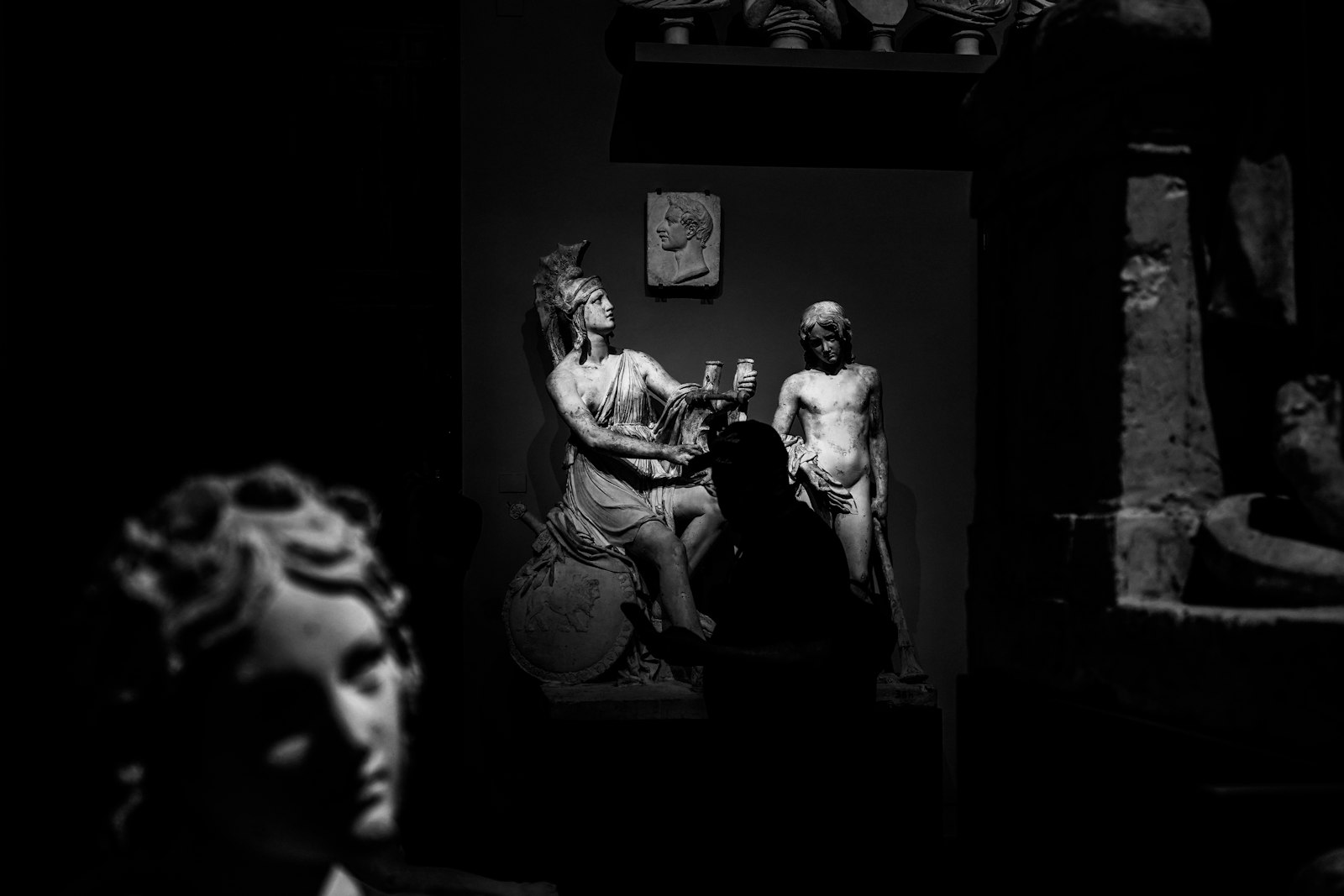
The hall was dressed as an imagined museum: marble cladding and plaster recreations of ancient sculpture, 3D-scanned and produced by Tuscan artisans to pass for the real thing. Writing in Wallpaper*, Jack Moss described a space lined with statuary — a temple built for a house that has spent three years being talked about in the past tense.
It was, in other words, a set about permanence made entirely of things pretending to be permanent. Whether that was the joke or the thesis, Demna left open.
What He Said It Was
A letter went round before the show. The lines that travelled furthest, quoted by Wallpaper*:
Standing in front of it, I felt overwhelmed.
And, closing:
I hope I made you feel Gucci today.
The ambition he set out was for Gucci to function as an adjective rather than a label. He was blunter elsewhere, telling Dazed: “Gucci is culture, it is a way of thinking and a way of being. Gucci needs to become a feeling.” To Numéro he put the same thought more sharply — “I don't want it to be intellectual. I want Gucci to be a feeling.”
The show notes, quoted by Grazia, asked for “products that can be enjoyed by a variety of people, that enrich their lives and make them feel great, that can stand on their own, without the need for pseudo-intellectual justifications.” That is a designer drawing a line under his predecessor's referential, footnoted Gucci without once naming him.
The Clothes
The body was the subject. Second-skin dressing throughout — a white minidress cut close, muscle tees with abdominals built into them, skinny leather jackets, hip cut-outs, togas, and a white gown drawn from Botticelli's Birth of Venus. The collection's title, Primavera, points at the same painter.
- Construction: heat-sealed edges and curved hems on body-clinging pieces; cropped jackets with pencil skirts; leggings fused into trousers; hybrid jacket-tops.
- Outerwear: feathered bombers, butter-soft leather bikers, circular stoles.
- Accessories: the Bamboo 1947 bag, minaudières and the Manhattan sneaker, alongside monogrammed duffles, ultra-slim sport loafers and laceless distressed monogram boots.
The finish belonged to Kate Moss, closing in a backless sequinned black gown with a white-gold Gucci-logo thong set with ten-carat diamonds — a direct line back to Tom Ford's 1997 G-string. It is the image the show will be remembered by, and it was engineered to be.
The Verdict
Brooke Bobb, writing in Harper's Bazaar, put it plainly: “For his show, Demna radically challenged luxury fashion and our collective relationship to taste.” Grazia's Pema Bakshi read it as the moment two years of anticipation “truly crystallised”.
What is genuinely new here is the refusal of explanation. Michele's Gucci invited you to identify the references; Demna's dares you not to bother. Whether a house this large can survive on feeling alone is the question the next collection will have to answer.
The Irish Note
There is a possible one, and it needs care. IMAGE reported in March 2026 that Abigail Sexton, 21, from Portmarnock and signed to Morgan the Agency, had “most recently” walked a Gucci show alongside Alex Consani, Emily Ratajkowski and Amelia Gray — all three of whom were in this cast. The magazine did not name the season, so we are not going to state it as fact. If it was this one, it is a considerable moment for a model barely two years into her career.
Hero photograph by Chelaxy Designs on Unsplash. It illustrates the article and is not from the show.
You Might Also Like
The latest from The Moiré Edit.