When the Hotel Is the Holiday: The Rise of the Destination Stay
The industry says the hotel is now the destination. The data says something more interesting — and Irish castle rates are running 29% above Scotland's.
You will be told, repeatedly, that 2026 is the year of the destination hotel — the property so complete that it becomes the reason for the trip rather than the base for it. The industry has a definition ready: a hotel chosen for its experiences, design identity or specialised offering rather than its location.
Here is the honest position. That is a hospitality marketing category, not a measured consumer trend. We looked for the research behind it and could not find any — no survey, no percentage, no named study. What the actual traveller data shows is something adjacent and more interesting: people are increasingly booking one place, staying put, and choosing it for how it makes them feel rather than what is nearby. Which, in the end, gets you to the same hotel by a more honest route.
What the data actually says
Booking.com's 2026 predictions surveyed more than 29,000 travellers across 33 countries and named seven trends. None of them is the one-base holiday. What the survey does establish is striking in its own right: 80% are open to a wellness-focused trip, a quarter travel specifically for quiet nature hobbies, 69% like the idea of foraging for a meal, and 75% say they deserve a reward for working hard.
That last number is the one that explains the sector. The destination hotel is not really a travel trend. It is a permission structure — a way of justifying spending a great deal of money on four days of doing very little.
The Irish set, and who is actually rated
Michelin's hotel Keys, announced in October 2025, are the most useful current ranking. Three Keys — the top grade — went to just two Irish hotels: Adare Manor and Ballyfin Demesne.
Two Keys: Ashford Castle (new that year), Cashel Palace, Park Hotel Kenmare (also new), Sheen Falls Lodge and The Merrion in Dublin. One Key: Castlemartyr, the Dylan, Dromoland Castle, Gregans Castle, No 1 Pery Square, Regency House Belfast, The Killarney Park, The Victoria and the Wilder Townhouse.
Forbes Travel Guide, announced in February 2026, is narrower still: two Five-Star hotels in Ireland — Adare Manor and Ashford Castle — with the Spa at Ashford Castle the country's only Forbes Five-Star spa. Conrad Dublin took Four-Star, with Four-Star spas at Adare and at ESPA in The Europe, Killarney.
The destination hotel is not really a travel trend. It is a permission structure — a way of justifying four days of doing very little.
The dining case
If a hotel is going to be the whole holiday, it needs a restaurant worth three nights. Ireland has 25 Michelin-starred restaurants in the 2026 guide — five with two stars, twenty with one — and a striking number of the one-stars are inside hotels: The Oak Room at Adare Manor, House at the Cliff House Hotel in Ardmore, the Morrison Room at Carton House, Lady Helen at Mount Juliet, Bishop's Buttery at Cashel Palace, and — new this year — The Pullman at Glenlo Abbey, which serves dinner in restored vintage railway carriages.
That is the destination-hotel thesis in its strongest form: six properties where you could plausibly not leave.
What it costs, and how Ireland compares
A 2026 index sampling fifteen Irish and ten Scottish castle hotels found Irish rates averaging 29% above the Scottish equivalent in peak season. The individual numbers, comparing a January night with a July one:
Read that caption again. Adare in January is 44% of Adare in July. Ashford is under half. If the hotel genuinely is the destination — if you are going there to sit by a fire, eat well and use the spa — then the weather outside matters far less than the tariff, and the entire proposition works better in the off season.
What each is for
Adare Manor — the most complete: 103 rooms in an 1832 Gothic Revival house, a starred restaurant, a Tom Fazio course hosting the 2027 Ryder Cup. Ashford Castle — the most romantic: nearly 800 years old at Cong, 83 individually designed rooms, and the only Forbes Five-Star spa in the country. Ballyfin Demesne — the most rarefied: 21 rooms, Relais & Châteaux, and available for whole-estate hire, which is a different kind of holiday altogether. Cliff House at Ardmore for the clifftop and the food; Sheen Falls at Kenmare and Dromoland in Clare for the classic castle-estate version; The Europe in Killarney for the lake and the spa.
The counter-argument
Two objections deserve stating, because the category invites them.
The first is that it is insular. You fly to a country and never see it — a walled garden, a tasting menu, a spa, and a car back to the airport. That is a legitimate way to spend a weekend, but calling it travel is generous.
The second is value. There is a telling detail in the 2026 Gold Medal Awards, the Irish hotel industry's own ceremony in January: the supreme winner was Harvey's Point in Donegal, favourite place to stay went to Castle Leslie in Monaghan, and not one of the great castle hotels appeared among the winners. The people who work in Irish hospitality, judging each other, did not pick the €1,500-a-night rooms.
How to actually do it
Go off season. Go for three nights rather than two, because the first evening is spent arriving and the last morning is spent leaving. Book the restaurant when you book the room — at the starred hotels, dinner is frequently full before the rooms are. Use the spa early in the stay rather than saving it. And leave the grounds at least once, if only to prove you could.
The verdict
The destination hotel is marketing language wrapped around a real and reasonable desire: to go one place, unpack once, and be looked after. Ireland does it as well as anywhere in Europe and charges accordingly — a 29% premium over Scotland at peak. The move is to want exactly this, and to want it in January.
More: our guides to Adare Manor and Ashford Castle.
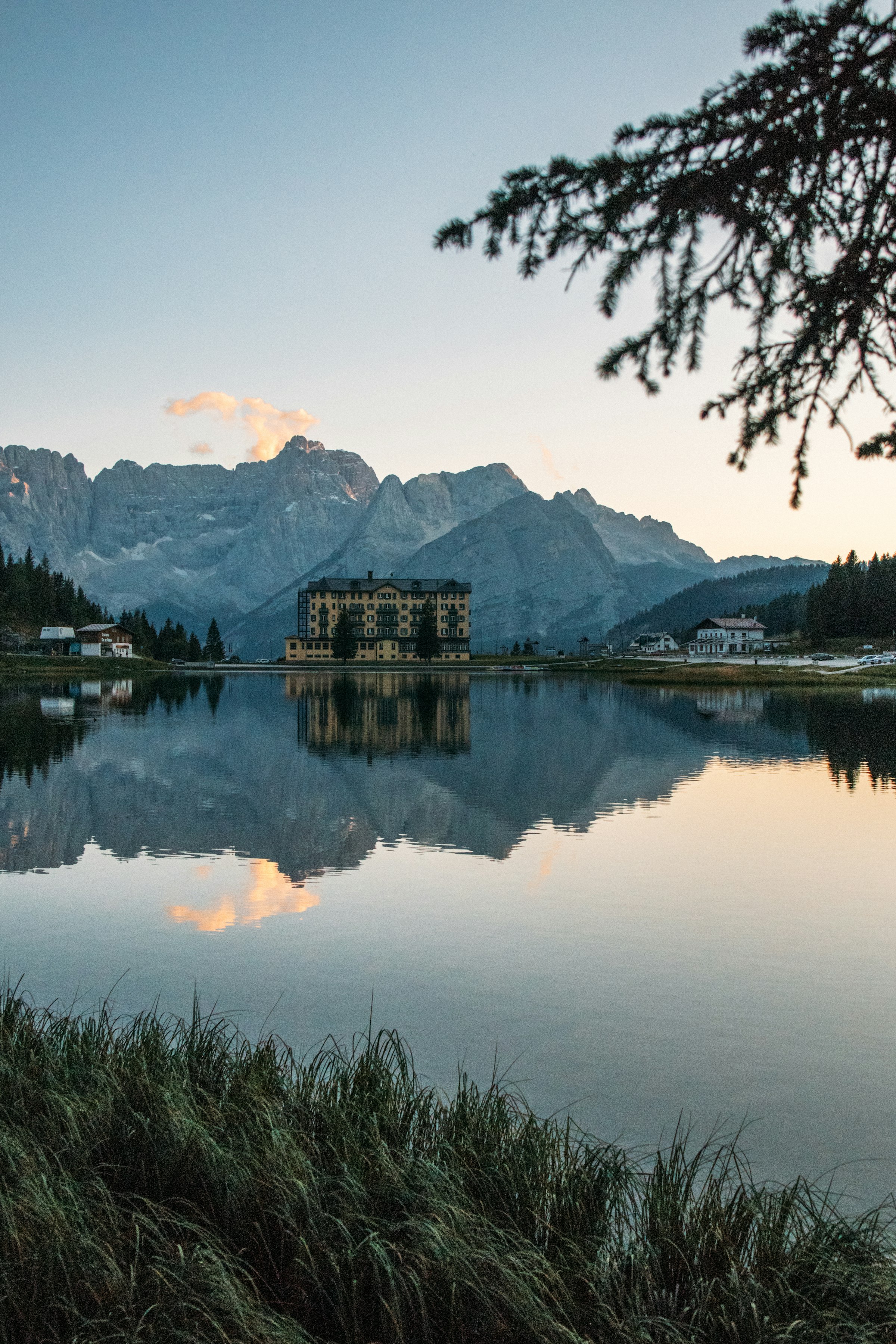
Hero photograph by Rafael Peier on Unsplash.
You Might Also Like
The latest from The Moiré Edit.