The Cotswolds: England's Most Beautiful Cliché, Done Properly
Honey-stone villages, farm-shop glamour and a quick hop from home — how to do England's prettiest corner without joining the coach party that Bibury is spending £175,000 trying to stop.
The Cotswolds is England's most beautiful cliché and it knows it. Two hundred square miles of honey-coloured limestone, wool-money churches and villages so composed they look art-directed — which, in the sense that four centuries of building in one material will do that, they were. It is an hour from Bristol, ninety minutes from London, and for an Irish visitor it is the easiest good-looking countryside in these islands to reach.
It is also, in places, being loved to death. Bibury — population about 630 — takes up to 20,000 visitors on a peak summer weekend and recorded more than 4,500 vehicle movements across one bridge in a single July day. What follows is how to see the good parts without adding to that.
The villages, ranked by whether you'll enjoy them
Bibury has Arlington Row, the fourteenth-century weavers' cottages that appear inside British passports, and it is the worst-affected village in the region. In March 2026 Gloucestershire County Council approved £175,000 to manage it — removing coach bays permanently, introducing pay-and-display on The Street with resident exemptions, widening footways, funding enforcement officers and looking at a park-and-ride. Go at dawn or do not go.
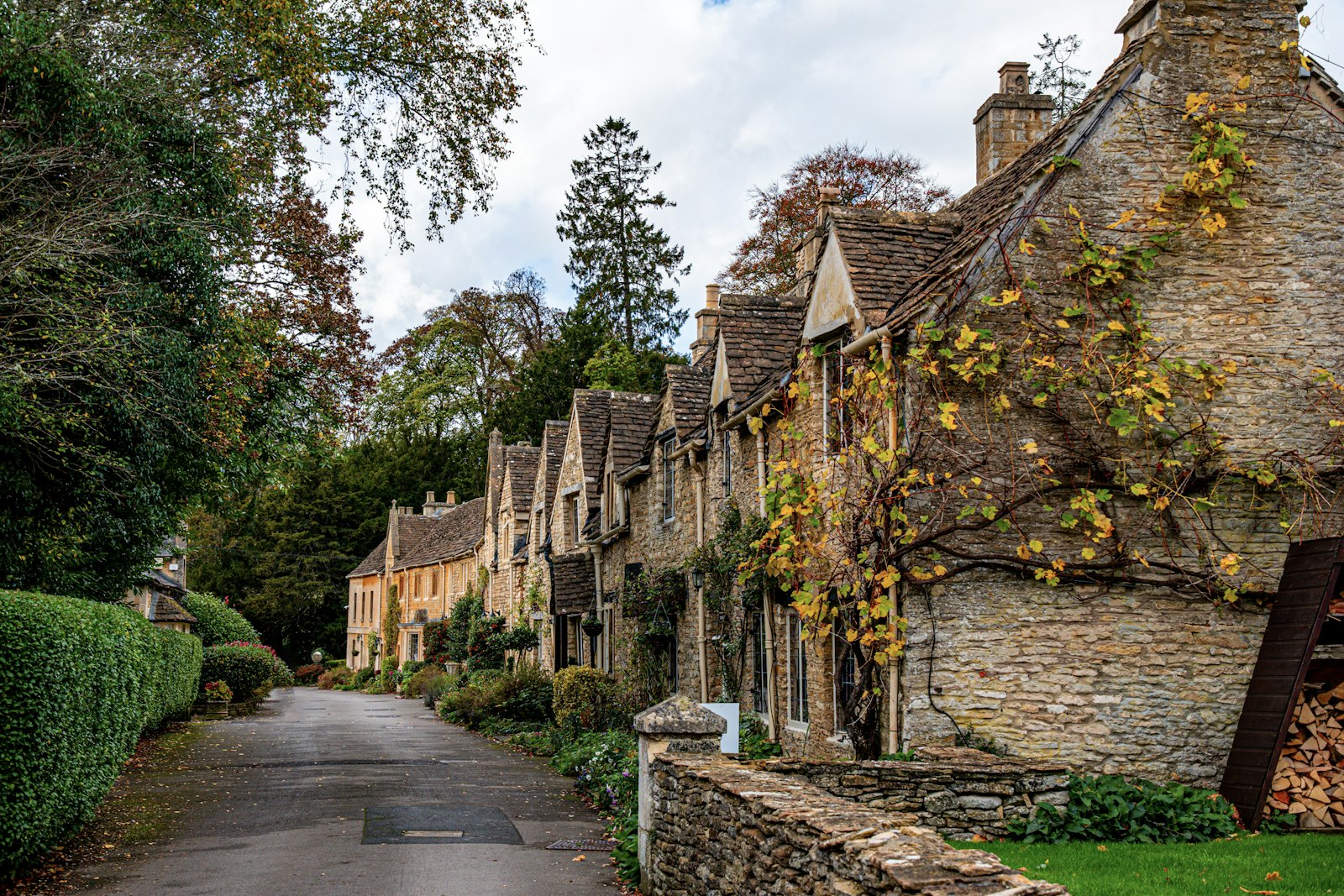
Castle Combe is repeatedly voted the prettiest village in England and has no public car park at all. Weekday mornings, or not at all.
Bourton-on-the-Water — the "Venice of the Cotswolds", low bridges over the Windrush — is the single most-visited village in the region and extremely crowded on summer weekends. Its coach park closed at the end of 2022, and there is a small per-stay tourism charge at the Rissington Road car park. Before 9:30am, or April–May and September–October.
Now the ones actually worth your day. Painswick, the "Queen of the Cotswolds", is genuinely quieter — ninety-nine yews in the churchyard and a Rococo garden. Chipping Campden has what is often called the finest High Street in England, a great wool church, the northern terminus of the Cotswold Way, most parking free, and the feel of a place still lived in rather than visited. Stow-on-the-Wold makes the best base — market square, antique shops, that famous yew-flanked church door, and a free car park at Fosseway. Broadway is popular but absorbs it, with all-day council parking around £4.
The Slaughters, Upper and Lower, are as peaceful as the name is not — but there is almost no parking. Walk from Bourton along the Eye; it takes half an hour and removes the problem.
Bibury has 630 residents and can take 20,000 visitors on a summer weekend. Go at dawn, or go somewhere else.
Driving and parking, which is most of the battle
District council car parks run roughly £4–£5 for two to three hours and about £10 all day, and they no longer take cash — contactless or the PayByPhone app only. Be alert to fraudulent QR stickers on the machines, which have been a problem.
The lanes are single-track with high hedges, dry-stone walls and blind bends, and passing-place etiquette is not optional. Avoid the July–August school holidays and the August bank holiday entirely. Spring and autumn weekdays, or early mornings, are when this landscape is what you came for.
The farm-shop question
Daylesford Organic opened its first farm shop and café in 2002 on Carole Bamford's family estate near Chipping Norton — about 1,500 acres — and effectively invented the aesthetic that the rest of the region now trades on. It holds a Michelin Green Star, retained in the 2026 guide for a fifth year, which is a more serious credential than the tote bags suggest. The Bamford brand followed in 2004, and the Haybarn Spa in 2005.
The pub arm is The Wild Rabbit at Kingham, which in January 2026 came 45th in the Estrella Damm Top 50 Gastropubs and won Sustainable Pub of the Year, with judges noting it had put the concept at the centre of everything it does.
Where to eat, on the record
Cheltenham is the surprise. Le Champignon Sauvage holds a Michelin star for its thirtieth consecutive year — an extraordinary run by any standard — and Lumière holds one for a fourth. Bib Gourmands in the 2026 Gloucestershire list went to Jai Ho at Bishop's Cleeve, Post at Newnham, and the Horse and Groom at Bourton-on-the-Hill.
On the pub side, the 2026 Top 50 is thick with local names: The Bell at Langford at 20, The Bull at Charlbury at 28, Killingworth Castle at 37, The Masons Arms at Clanfield at 44, and The Double Red Duke at 87 in the wider hundred.
Where to stay
Thyme at Southrop is the one to save for: 31 rooms across seventeenth-century buildings on a 150-acre estate, with the Ox Barn restaurant, a spa, a cookery school and a pub of its own. From around £500 a night with breakfast.
Estelle Manor near Eynsham opened in 2023 in a neo-Jacobean house of 1908 on sixty acres, from the Ennismore family behind The Hoxton. Rooms start around £450; the draw is Eynsham Baths, a 3,000-square-metre Roman-inspired bathhouse with a tepidarium, hammam, hay sauna and ten treatment rooms — £95 for three hours if you are staying.
And 2026 is a busy year for openings: treehouses with private sauna decks at Calcot in June, Dumbleton Hall near Winchcombe reopening with 34 rooms, cabins and a spa at CABÜ in the Cotswolds, 20 new rooms at the Wild Duck at Ewen, and the Redesdale Arms at Moreton-in-Marsh in the autumn.
Walking it
The Cotswold Way runs the length of the escarpment and is walkable year round. Winter, autumn and spring give the clearest views off the edge; late spring and early summer bring the wildflower grassland; the beech woods are best in spring and autumn. Chipping Campden is the northern end. Even a day section will show you more of this landscape than a week of village car parks.
Blenheim Palace sits just outside the official area and is worth a full day on its own — a UNESCO site, Churchill's birthplace, and grounds by Capability Brown.
Doing it from Ireland
Fly to Bristol for the south of the region, Birmingham for the north, or Heathrow if the fares suit — then hire a car, because there is no realistic way to see this landscape without one. Bristol to Painswick is a little over an hour.
Go in April–May or September–October, midweek. The light is better, the lanes are passable, the pubs have tables, and the villages get to be villages again.
The verdict
Skip Bibury, base yourself at Stow or Chipping Campden, walk a stretch of the Way, eat once somewhere with a star and once in a pub with a fire, and treat the farm shops as the theatre they are. The Cotswolds is a cliché because it earned it — just not on an August Saturday in Bourton.
Photograph: Castle Combe by George Ciobra on Unsplash.
You Might Also Like
The latest from The Moiré Edit.