The Coolcation: Why 2026 Is Heading for the Mountains, Not the Med
As Mediterranean summers turn punishing, the money is moving north and up. The evidence for the coolcation, and the booking rules that now govern the Dolomites.
The word is ugly and the trend is real. A coolcation is a summer holiday chosen for its temperature — north instead of south, up instead of down, a fjord or an alpine meadow instead of a Mediterranean beach that now reaches the high thirties by ten in the morning.
For a decade this was a fringe preference. In 2026 it is a measurable shift in where people are searching, booking and going. Here is the evidence, the honest counter-argument, and — because it is the destination the trend has made — exactly how the Dolomites now work, which is nothing like it did five years ago.
The evidence
Start with the heat, because it is the engine. Western Europe's average June–July temperature in 2026 was 21.62°C — a record, beating the 2022 benchmark, according to the Copernicus Climate Change Service. Globally, 2026 is running third-warmest, behind 2024 and 2025. July's average sea surface temperature, 20.96°C, was the highest ever recorded for the month. Since May there have been national temperature records, drought, wildfires from Albania to Huelva, and thousands of heat-related deaths.
Now the booking behaviour. A Trip.com Group report published in April 2026 found a 74% year-on-year rise in searches for cooler destinations since the start of the year, and a 237% surge in search volume across June to August 2025 against the same months in 2024. Searches for flights to Iceland rose 85% for summer 2026.
And the arrivals data follows. Norway passed 40 million guest nights for the first time in 2025 — 40.6 million, up 5.2%, with international nights up 14%. Finland recorded an all-time high of 7.2 million international hotel nights, up 12%.
The honest counter-argument
Not everyone buys it. The sceptical case, and it deserves airing, is that Spain simultaneously set record tourist numbers — so what we may be seeing is general post-pandemic tourism growth plus social-media virality around Lofoten and Lapland, dressed up as a climate story. Better flight access to the north explains some of it too. One widely quoted line has it that there is no such thing as a coolcation — you will sweat in the Arctic too.
The fair reading is somewhere in the middle: northern and alpine destinations are growing faster than the market, southern ones are not shrinking, and the shift is at the margin rather than a mass migration. But the margin is where booking systems break — which brings us to the mountains.
Norway passed 40 million guest nights for the first time in 2025. The trend is real; it is just smaller than the headlines suggest.
The Dolomites, and the rules nobody reads
The Dolomites are the emblem of this shift, and they have responded by rationing themselves. If you take one thing from this piece, take this: in 2026 you cannot simply drive to the famous places.
Tre Cime di Lavaredo
The toll road to Rifugio Auronzo requires mandatory online pre-booking, with reservations opening in late April. The 2026 toll is €40 for a car, €26 for a motorbike, €60 for a campervan and €80–€160 for buses, valid for twelve hours from entry. The road is generally open from late May or early June to late October, snow permitting, running around the clock in high summer and daylight-only by late October. There are about 700 spaces at the top, at 2,320 metres.
Alternatively, take the bus: Dolomitibus from Cortina and Auronzo di Cadore, or SüdtirolMobil's 444 from Dobbiaco station, mid-June to end September, reservation required. Official advice is to avoid the Misurina bus in July and August — the queues are punishing.
Lago di Braies
From 1 July to 15 September, between 09:00 and 16:00, you cannot drive up without an advance reservation. You book a date and time slot through the Braies tourist association, register your number plate, and carry the confirmation to the barrier. Overnight guests, residents and service providers are exempt, as is anyone using the shuttle from car park P1, about six kilometres away.
Without a booking, your options are to arrive before nine or after four, take buses 442 or 439 (also needing reservations in peak season), walk or cycle in from Schmieden, or stay in the valley overnight. And note — contrary to a lot of breathless coverage — this is not a new 2026 restriction. Braies has had access rules for years.
Alpe di Siusi
Private vehicles are banned between 23:00 and 05:00 daily. Since 29 June 2026, online parking reservation is mandatory, bookable up to six days ahead: P1 Spitzbühl €15 a day for a car, P2 Compatsch €30, with coaches at €160. Guests staying up on the alp get permits to drive on arrival and departure days and, during their stay, before 10:00 and after 17:00. Holders of the European Disability Card can drive at any time with free reserved parking, pre-registered. In the shoulder weeks either side of the season, P2 drops to €15.
Seceda — and a dispute worth understanding
Seceda's ridgeline is the most photographed skyline in the Alps and the site of a genuine conflict. In early July 2025 local landowners installed a turnstile charging €5 at the start of the ridge trail, to compensate for damage to their land and fund path maintenance — after 8,000 people walked it in a single day that month. Park authorities deactivated it; the landowners put it back, calling it a cry for help.
Be clear about what this is: not an official access fee. Tourism staff at the turnstile now explain that payment is voluntary and suggest a longer alternative route. Whether you pay is a decision about whose side you are on, and the landowners have a case. The cable car, separately, moved to pre-booked time slots from summer 2026.
Where else, if not there
Norway is the headline beneficiary — fjords, Lofoten, and a currency that is kinder than it used to be. Iceland is up 85% in flight searches and correspondingly busy. Slovenia is the value option: the Julian Alps and Lake Bohinj do most of what the Dolomites do at a fraction of the cost and crowding. Finland broke records last year. And Scotland — which Irish travellers routinely overlook — offers mountain weather and long northern evenings an hour's flight away.
Practicalities
Book everything early. That is the whole lesson of the 2026 Dolomites: tolls, parking, cable-car slots, buses and rifugi all now operate on advance reservation, and the systems open months ahead. A mountain hut in high season is booked in spring, not in July.
Go in late June or September. July and August are when the quotas bite hardest and the meadows are at their busiest. September gives you clear air, thinner crowds and huts still open — and the temperature you came north for in the first place.
The verdict
The coolcation is a real if modest shift, and it has arrived somewhere with finite space. The Dolomites are not less beautiful for being rationed; they are more likely to still be worth visiting in twenty years because of it. Read the rules, book in spring, and take the bus.
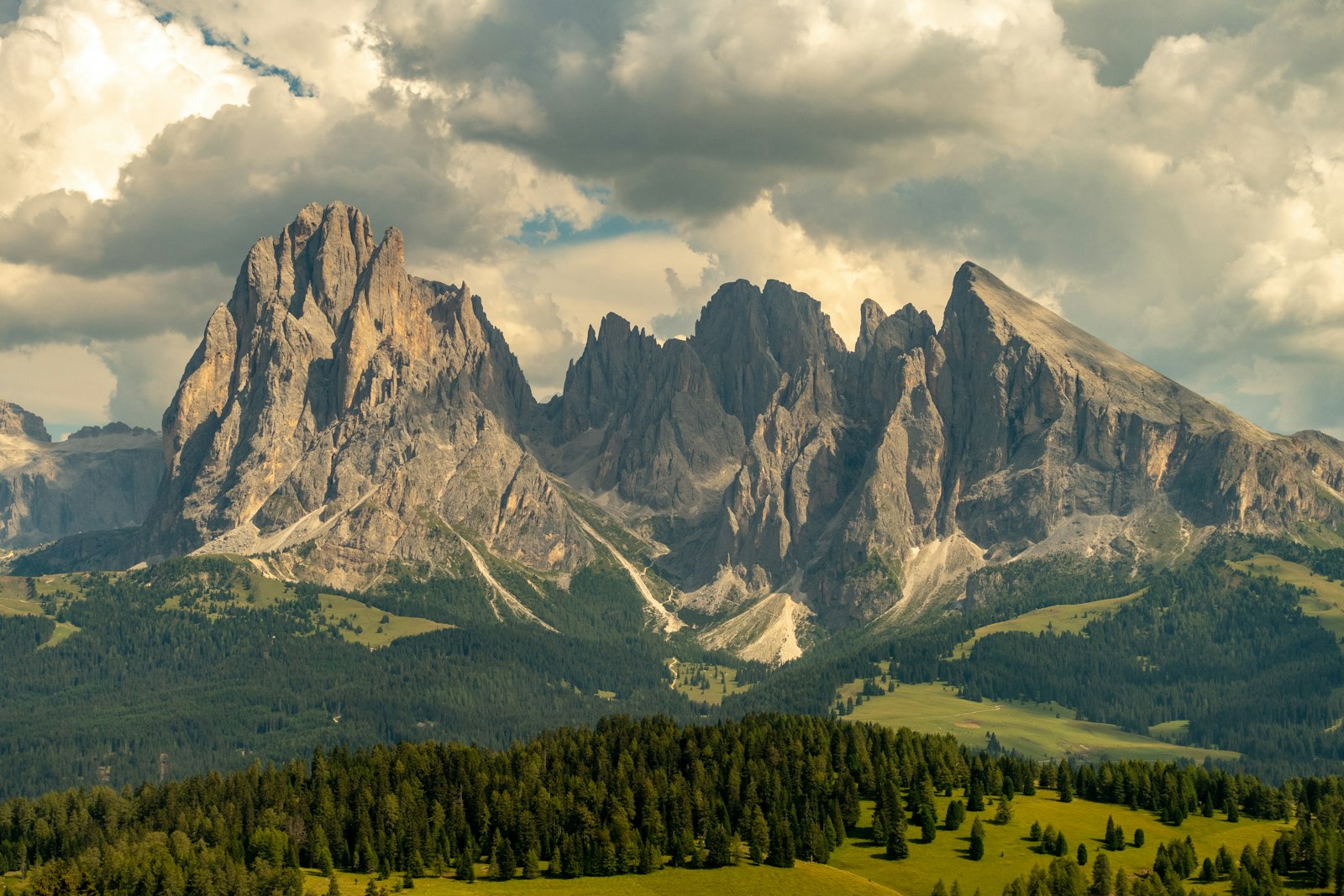
Photograph: Sassolungo from Alpe di Siusi by Michiel Ronde on Unsplash.
You Might Also Like
The latest from The Moiré Edit.