Can Fashion Ever Be Circular?
The question defining sustainable fashion in 2026 — and the Irish designers refusing to wait for a perfect answer before building the thing anyway.
Circularity is the most used and least examined word in fashion. Almost every major brand now claims some version of it. Almost none of them can describe, in specific terms, where a garment goes at the end of its life. That gap between the claim and the mechanism is the whole story.
The Problem With Fashion
Fashion ranks among the most polluting industries on earth. Fast fashion now produces upwards of twenty-four collections a year, on a business model that depends on prices low enough to make disposal rational. The environmental cost is externalised — borne by the communities near the factories and the landfill, not by the buyer or the brand.
The circular economy proposes an alternative: products designed from the outset so that nothing becomes waste, because everything is designed for reuse, repair or recycling. No fully circular fashion industry exists at commercial scale anywhere in the world. But Ireland is doing more of the serious groundwork than its size would suggest.
What Circular Fashion Actually Means
It is worth separating two terms that get used interchangeably. Sustainable describes a broad set of impact-reduction practices: organic cotton, fair wages, water conservation. Circular describes a systems approach — products that return to the system with zero landfill waste. A brand can be meaningfully sustainable and not remotely circular.
The closed loop does not yet exist at commercial scale. But the Irish designers profiled here are not waiting for perfection.
— Clara O'Brien, Sustainability Editor
The Irish Circular Fashion Leaders
Afore After — Sandra Murphy, County Clare
The most technically rigorous circular proposition in the country. Murphy has eliminated fossil-fuel-derived synthetics entirely, working exclusively in Tencel Lyocell — a fibre produced in a closed-loop process that recovers around 99% of water and solvent. That recovery rate is what makes the claim a closed loop at material level rather than a marketing line. The garments are not compromises; they are simply good clothes that happen to be built correctly.
RE-PETE Project — Katie Walsh
A modular luxury label built from single-use plastic, discarded wool, factory scraps and, memorably, fastenings made from coffee cup lids. The philosophy is that waste materials interrogated through craft become a mark of design quality rather than a concession. Walsh partners with regenerative farms in the Philippines and Türkiye.
Rediscover Fashion — Ballymun, Dublin
Ireland's National Centre for Circular Fashion, working with 100% repurposed clothing since 2008. What distinguishes it is that the circular thinking extends to people: the operation provides workforce training for the long-term unemployed, and revenue is reinvested rather than extracted. Materials and human opportunity, treated as the same problem.
The Regulatory Moment
What has changed is that circularity is stopping being voluntary. The EU Green Deal and the Sustainable Products Regulation are converting what were marketing positions into compliance requirements for anyone selling into the European market. Supply-chain circularity is moving from differentiator to entry condition.
The strategic implication for the designers above is considerable. Brands that already meet these standards are not scrambling to retrofit; they are simply already compliant, in a market where their larger competitors are not. Doing the difficult thing early has turned out to be the commercial position as well as the ethical one.
So — Can It?
Not yet, and not soon, at the scale the industry currently operates. But the honest version of the answer matters more than the optimistic one. Circularity at commercial scale requires infrastructure that does not exist: collection systems, fibre-to-fibre recycling capacity, and a consumer culture that treats repair as normal. What Ireland has, disproportionately, is people building the pieces of that infrastructure in advance of the demand — which is the only way it ever gets built.
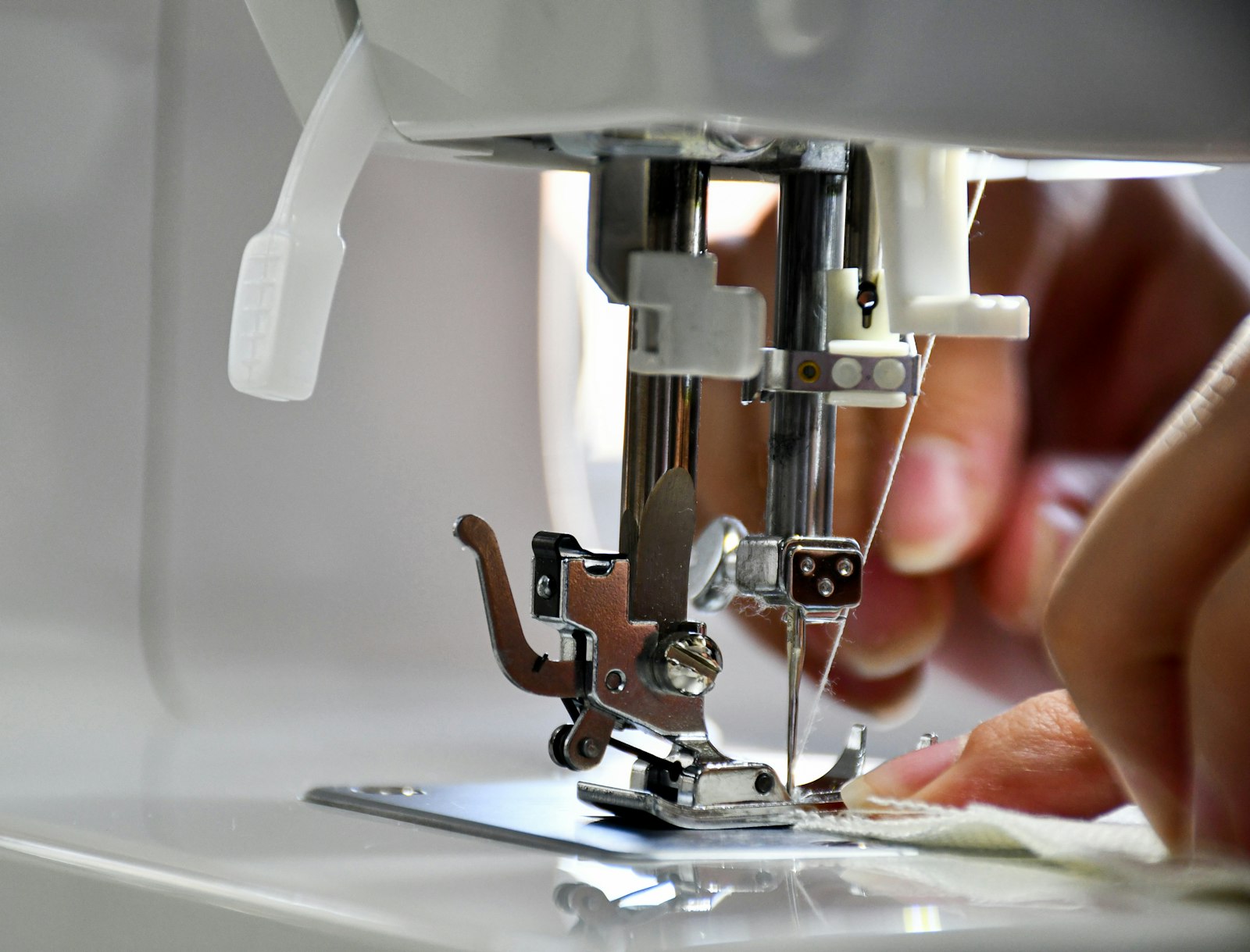
Hero photograph by Omar Alrawi on Unsplash.
You Might Also Like
The latest from The Moiré Edit.