byReidin: The Bow, The Bags and The Woman Behind Them
Structured mini bags with a signature bow, from €15 to €265, made by a woman who spent 28 years flying for Virgin Atlantic — and still does.
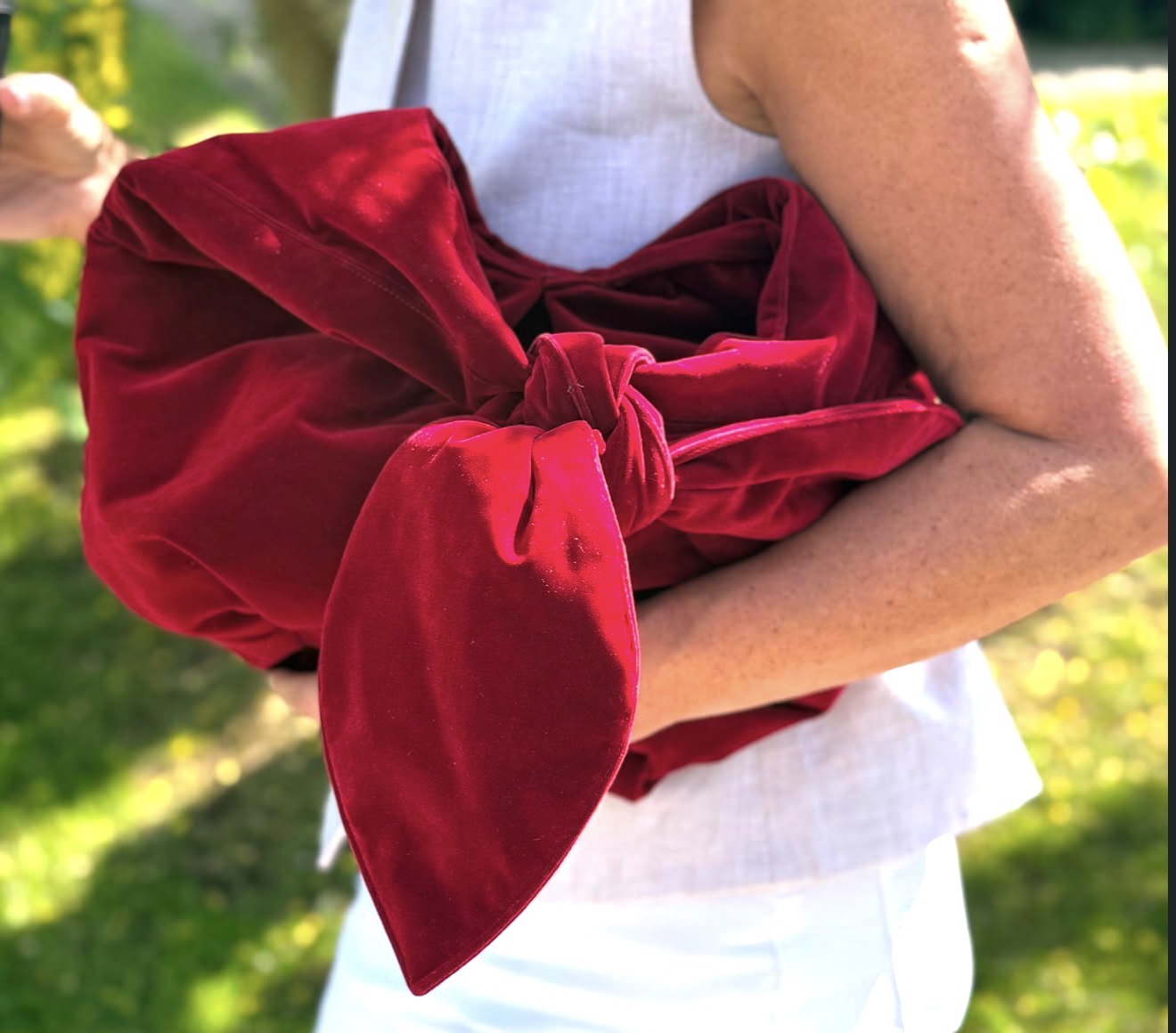
The bag that made byReidin is called the Minnie, it costs €165 in velvet, and the thing that makes it work is a bow.
Not a decorative afterthought stuck on at the end — a properly considered one, sitting front and centre on a small structured body with a magnetic closure and a short top handle, in a proportion that reads as confident rather than sweet. On the Luxury Leopard it detaches. On the Adele Black, in matte cowhide with a subtle grain, it is the only ornament on an otherwise severe little bag. It is a good piece of design, and it is doing a lot of work.
What is missing from the website is the woman who made it. There is a name on this label and the site never says whose it is — no About page, no founder, two blogs sitting empty. She is, in person, entirely willing to tell you; she just has not put it anywhere a customer would find it. So before the bags, the person.
Twenty-eight years at 38,000 feet
The designer is Reidin Magner. She grew up in Effin, Co. Limerick, left for London at nineteen to work for Virgin Atlantic, and stayed with the airline for twenty-eight years. She came home in July 2022 and launched that September. Per The Irish Times last December, she is "a bone-fide jet setter (she still works part time as cabin crew)."
She is still flying. She started a luxury handbag label at roughly the age most people stop starting things, and she did it without a fashion degree — the eye was built in airport terminals and other people's cities across three decades of looking at how women in different countries carry themselves.
Her reasoning is refreshingly free of mission statement:
I only moved home last July to launch my bags here as I felt there was a niche in the market for cool unique handbags that were of high quality and luxurious but affordable.
The range, properly
The Minnie is the anchor and it comes in more registers than a small label usually attempts. The Adele Black is the grown-up one: 100% cowhide, matte, faintly grained, €265 — the piece you would carry to something that mattered. The Chocolate Brown Suede, same price, is cut from Italian-imported suede and is the warmest thing in the range. The Luxury Leopard at €155 is printed pony hair with an exclusive printed lining and a detachable bow, which is the version doing the heavy lifting on Instagram. Red, green and blue velvet Minnies sit at €165; the silver and gold Aria at €175.
The Biddy is the micro version at €125 — genuinely small, phone and card, no negotiation. The Milly at €155–€165 is the evening register, and the black velvet with a silk frill is the prettiest thing here. The Margaux Clutch at €145 is the cleverest: 100% metallic leather, a concealed magnetic closure so the front stays unbroken, and a detachable gold chain that takes it from clutch to shoulder to crossbody. In silver, gold, metallic orange and soft lilac.
The Emmie at €195 is the largest, in leopard and a rich red. The Billy Beach Bag at €115 is the outlier and the most fun — vanilla and charcoal, pink and red stripes, orange. The Alice Cardholder is €15, which is the price of a decent lunch and makes a good present.
The label describes the collection as embodying "luxury and timeless femininity, crafted for the woman who appreciates style without compromise," made from "supple leather, rich suede, and indulgent velvets." The materials list is accurate to what arrives.
The Margaux Clutch launch, on byReidin's Instagram.
The price ceiling is the strategy
Nothing here goes above €265. In a market where an Irish leather bag with genuine design ambition routinely opens north of €400, that ceiling is a decision, and it is the most commercially interesting thing about the brand. It is her "luxurious but affordable" line turned into a price list, and it puts a well-made occasion bag inside reach of someone buying one for a wedding rather than as an investment.
It appears to be working. A striking number of pieces are currently sold out: the gold Aria, the plum Milly, the chocolate suede, the Adele Black, both Emmies. For a label of this size, a half-empty shop is a good sign.
There is a small tension in the copy that suggests a brand still deciding what it is. The homepage sells "bold," "fashion-forward," "made to turn heads." A product page reaches for "quiet luxury" and "understated." The catalogue — leopard pony hair, metallic orange, jewel velvet — is emphatically the former, and is better for it. The bold version is the one that stands out on a rail.
"Suede season starts now" — the suede Minnie, styled for both seasons.
Designed in Ireland — and made in Shanghai
The site says "Designed in Ireland" and "100% Designed in Ireland." It does not say made in Ireland, and when this article first ran we could not establish where the bags were physically made. So we asked her.
She answered immediately, in full, and without a press officer anywhere near it. The bags are made in Shanghai, by two small teams she has worked with since the beginning.
The detail is the part worth reading twice. She met Jack, who runs a small leather factory, twenty-three years ago, when she was living in Shanghai — six years there, commuting to London for the flying job. Her fabric team is led by Summer, a tailor she met fifteen years ago, back when Summer was making clothes for her personally.
So the supply chain here is not a factory found through an agent. It is two working relationships that predate the brand by nineteen and eleven years respectively.
She travels out every couple of months, and often monthly when a new design is in progress — involved, in her account, in everything from the first samples and choosing materials to visiting fabric factories and developing the finished bag.
On the obvious question, why not Ireland, she is unbothered:
Why not Shanghai? It's a city I know incredibly well, and I have teams there who I trust completely. — Reidin Magner
And she was emphatic about one thing above all others:
I spend more time messaging them than messaging my own family. They are absolutely incredible and the best team to work with. I couldn't be anywhere without them. — Reidin Magner
Two observations, and both are to her credit.
The first is that "designed in Ireland" turns out to be precisely accurate — neither more nor less than what she does. A great many Irish labels are considerably vaguer about the same arrangement, and some let the shopper believe something that is not true. She does not.
The second is the openness. She points out that she posts her Shanghai trips and the production process to her stories, and she is right that she does. Overseas manufacturing is the thing small brands are most often coy about; treating it as something to show rather than something to manage is unusual, and it is the more confident position.
One directory listing states she "designs and handcrafts each piece herself." Nothing on her own site supports that, so we are not repeating it. The only material-origin claim anywhere is the Italian suede.
There are no sustainability claims of any kind, which we would rather see than the invented sort. A small label that has not yet built a supply-chain story is better off saying nothing.
Behind the scenes at the summer campaign shoot.
The rebrand, and the road so far
byReidin launched in September 2022 under a different name — Reima Studio — and a small fossil of it survives in the shop: the gift card still lives at a URL ending /products/reima-gift-card. We had assumed the change was a considered piece of brand positioning. The real reason is better:
I changed the name of my brand simply because people had started calling me "Reima" for some reason! So I decided to make it more personal and changed it to byReidín. — Reidin Magner
Which is the correct decision arrived at by accident. Her name on the label is the strongest thing the brand has.
In March this year the Cork Independent reported that byReidin showed in London — a five-designer emerging showcase at St John's Church off Oxford Street, paired with the designer Temi, with three bags chosen for the looks: the Laura Leopard, the red velvet Minnie and the limited-edition plum Milly.
We can only find that one source, it misspells the brand on first mention, and it names no season or organiser; St John's is an independent showcase venue rather than an official British Fashion Council slot. So the accurate framing is that she showed during London Fashion Week in an emerging-designer showcase — which is still a long way for a two-year-old label from Effin to have travelled in under four years.
She is not part of Ireland Fashion Week and does not appear in the 2026 line-up. On this evidence she should be.
The verdict
Buy the Margaux if you want one bag that does three jobs, the Adele Black if you want the one that will still look right in ten years, and the Alice cardholder if you need a present under €20. The bow is the signature and it earns its place.
And the story behind it — an Irish woman who spent twenty-eight years in the air and came home to build this, still flying while she does, with a leather-maker she has known for twenty-three years and a tailor she has known for fifteen — is the best asset the brand has.
She told us all of it in one go, unprompted and at length, and finished by asking that we stress how proud she is of her team in Shanghai. Consider it stressed.
It still deserves an About page.
Updated. After this article first ran we put our open questions to Reidin Magner, who answered them in full. The sections on where the bags are made and on the change of name have been rewritten using her own words.
Hero photograph taken from byReidin's own website, byreidin.com. Additional product images shown via the brand's own Instagram.
You Might Also Like
The latest from The Moiré Edit.